
- Introduction: The Power of Play in Learning
- What is Play-Based Learning?
- How Play-Based Learning Enhances Skills
- The Science Behind Play-Based Learning
- Implementing Play-Based Learning in Education
- Real-Life Examples of Play-Based Learning Success
- Overcoming Challenges in Play-Based Learning
- Conclusion: The Future of Learning Through Play
- FAQ: How Play-Based Learning Enhances Social Skills
- What is play-based learning?
- How does play-based learning enhance skills?
- What types of play help in cognitive development?
- Can play-based learning replace traditional learning methods?
- How can parents encourage play-based learning at home?
- Is play-based learning scientifically proven to be effective?
- What are the best strategies for teachers to implement play-based learning?
Introduction: The Power of Play in Learning
In today’s fast-paced world, education systems are continuously evolving to meet the needs of young learners. One of the most effective and engaging approaches gaining popularity is play-based learning. But why is this method so effective? Research shows that play-based learning enhances skills, helping children develop essential abilities needed for academic success and lifelong learning.

By integrating play into learning environments, educators and parents can foster problem-solving abilities, creativity, critical thinking, and communication skills. This blog post will explore how play-based learning enhances skills, why it is a crucial part of early childhood education, and how parents and teachers can implement it effectively.
What is Play-Based Learning?
Before diving into the benefits, it’s essential to understand what play-based learning is. Unlike traditional rote memorization methods, play-based learning is an educational approach that encourages children to learn through structured and unstructured play. This type of learning is child-driven, meaning children explore, experiment, and discover new things while having fun.
There are different types of play that contribute to learning, such as:
- Free Play: Child-led activities without specific learning objectives.
- Guided Play: Activities designed by teachers with learning outcomes in mind.
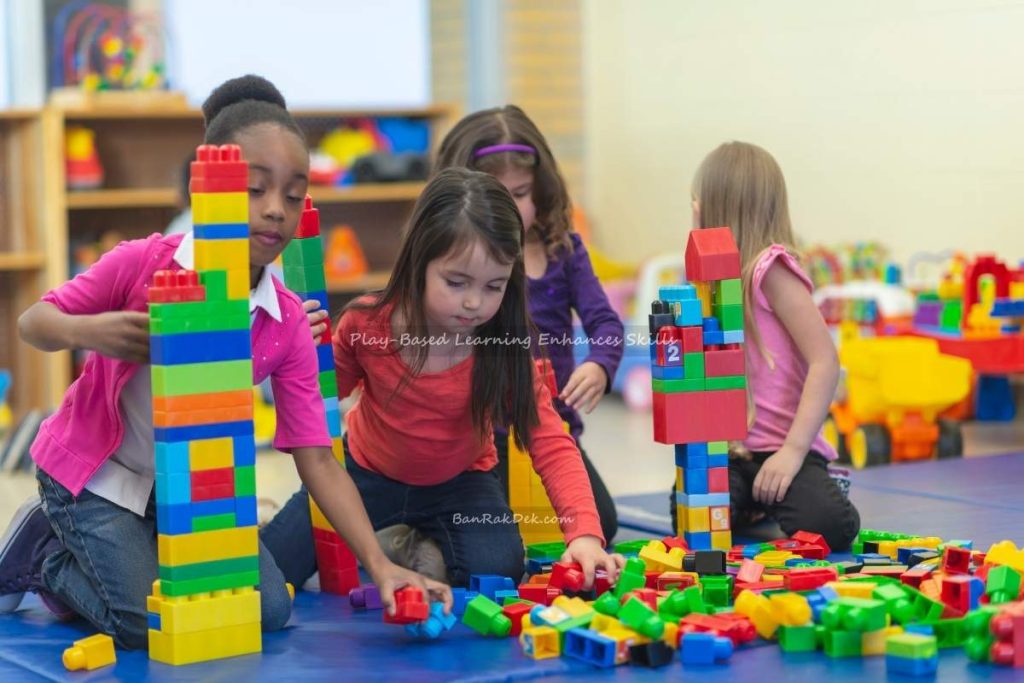
- Constructive Play: Building or creating things using materials like blocks, Legos, or art supplies.
- Pretend Play: Role-playing or imaginative play where children take on different roles.
- Physical Play: Activities involving movement, such as running, jumping, or dancing.
Each type of play contributes uniquely to child development, proving why play-based learning enhances skills so effectively.
How Play-Based Learning Enhances Skills
Boosting Cognitive Development
Play-based learning enhances skills by stimulating brain activity and improving essential cognitive functions. Here’s how:
Encourages Problem-Solving & Critical Thinking
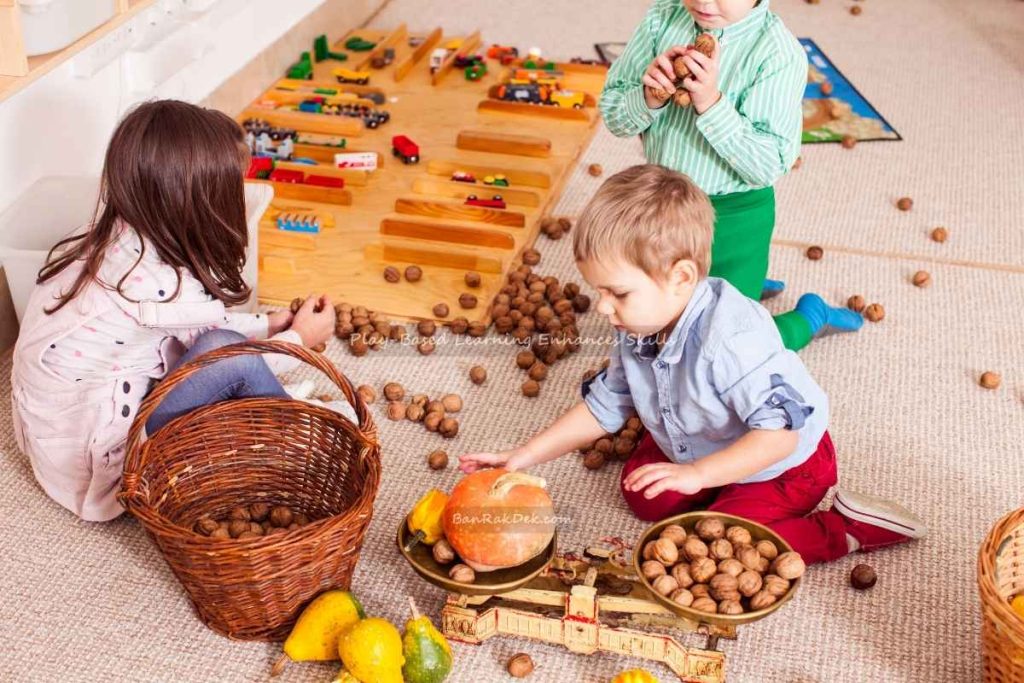
When children engage in activities like puzzles, board games, or building blocks, they learn to strategize, analyze, and make decisions. This process strengthens their problem-solving skills and helps them approach challenges with logic and creativity.
Strengthens Memory & Concentration
Games that require memorization, such as matching games or storytelling, improve children’s ability to retain information. The interactive nature of play enhances their focus and attention span.
Enhances Language & Communication Skills
Through storytelling, role-playing, and group games, children expand their vocabulary, improve sentence formation, and learn how to express their thoughts effectively. This is especially beneficial for early literacy development.
Promotes Creativity & Imagination
Creative play, such as arts and crafts or imaginative role-playing, encourages children to think outside the box. This ability to explore different ideas and scenarios fosters innovation and originality.
Strengthening Social & Emotional Skills
Play-based learning enhances skills by teaching children how to interact, share, and collaborate with others. These social skills are essential for building healthy relationships and succeeding in school and beyond.
Encourages Cooperation & Teamwork
When children engage in group play, they learn to take turns, share, and work towards a common goal. This fosters a sense of community and cooperation.
Develops Emotional Intelligence
Play allows children to express their emotions and understand others’ feelings. Through pretend play and storytelling, they learn empathy, compassion, and self-regulation.

Builds Confidence & Independence
When children succeed in a game or complete a creative project, they gain confidence in their abilities. This boosts their self-esteem and encourages independent thinking.
Improves Conflict Resolution Skills
Children often face conflicts while playing, whether it’s deciding game rules or dealing with disagreements. Play-based learning helps them develop negotiation and problem-solving skills, preparing them for real-life social interactions.
The Science Behind Play-Based Learning
Scientific research supports the claim that play-based learning enhances social skills. Studies in neuroscience have shown that play activates various regions of the brain associated with memory, problem-solving, and emotional regulation.
- Brain Development: Play stimulates neural connections, improving brain function and adaptability.
- Dopamine Release: Engaging in enjoyable activities increases dopamine levels, which enhances motivation and learning retention.
- Cognitive Load Reduction: Learning through play reduces stress and cognitive overload, making it easier for children to absorb information.
This scientific backing further strengthens the argument for incorporating play into early childhood education.
Implementing Play-Based Learning in Education
Both parents and educators can incorporate play-based learning into daily routines. Here are some effective strategies:

For Parents
- Create a Playful Home Environment: Set up areas with toys, books, and creative materials.
- Encourage Outdoor Play: Activities like running, climbing, and exploring nature improve both physical and cognitive development.
- Join in Playtime: Engage with children in games that require communication and teamwork.
- Use Educational Toys: Puzzles, building blocks, and storytelling games enhance learning.
For Educators
- Design Play-Centered Lesson Plans: Integrate educational games, role-playing, and hands-on activities into the curriculum.
- Promote Group Activities: Encourage collaboration through team-based learning games.
- Incorporate Music & Movement: Songs and dance improve memory and motor skills.
- Use Interactive Learning Tools: Digital games and apps can be effective for enhancing engagement.
By applying these strategies, parents and teachers can create a nurturing environment where play-based learning enhances skills effectively.
Real-Life Examples of Play-Based Learning Success
Countries with play-focused educational systems, such as Finland and Sweden, consistently rank high in academic performance. Their emphasis on play-based learning fosters creativity, problem-solving, and social competence, proving that this approach has real-world benefits.

Moreover, schools that implement Montessori and Reggio Emilia teaching philosophies also report significant improvements in students’ academic and social development. These methods emphasize self-directed play and experiential learning, reinforcing the idea that play-based learning enhances skills in meaningful ways.
Overcoming Challenges in Play-Based Learning
Despite its benefits, some educators and parents may be hesitant to adopt play-based learning due to misconceptions such as:
- “Play isn’t real learning.” In reality, play-based learning is scientifically proven to improve cognitive and social development.
- “It lacks structure.” While play is fun, structured play activities can have clear learning objectives.
- “Traditional methods are better.” Rote memorization may help with factual recall, but play-based learning enhances deeper understanding and critical thinking.
By addressing these concerns and embracing a balanced approach, we can fully utilize the power of play-based learning in education.
Conclusion: The Future of Learning Through Play
Incorporating play into education is not just beneficial—it is essential. The overwhelming evidence shows that play-based learning enhances skills, fostering problem-solving abilities, communication, emotional intelligence, and creativity.
As we look toward the future of education, integrating play-based learning into classrooms and homes will be crucial in developing well-rounded, capable individuals. By encouraging play, we give children the best possible start in their learning journey.
So, let’s embrace the power of play and watch children thrive in ways beyond traditional learning methods!
FAQ: How Play-Based Learning Enhances Social Skills
What is play-based learning?
Play-based learning is an educational approach that encourages children to explore, discover, and learn through play. This method fosters creativity, problem-solving, and communication skills.
How does play-based learning enhance skills?
Play-based learning enhances skills by improving memory, critical thinking, problem-solving, communication, teamwork, and emotional intelligence in children.
What types of play help in cognitive development?
Constructive play (building blocks), pretend play (role-playing), and games involving problem-solving (puzzles, board games) significantly contribute to cognitive growth.
Can play-based learning replace traditional learning methods?
While traditional learning has its place, integrating play-based learning creates a balanced approach, making learning more engaging and effective.
How can parents encourage play-based learning at home?
Parents can create a play-friendly environment, encourage outdoor activities, use educational toys, and participate in storytelling or role-playing games.
Is play-based learning scientifically proven to be effective?
Yes, studies show that play-based learning enhances skills by stimulating brain function, improving memory retention, and reducing stress.
What are the best strategies for teachers to implement play-based learning?
Educators can integrate role-playing, group activities, hands-on experiments, and interactive games into their lesson plans to support cognitive and social development.