
- Introduction
- The Social Benefits of Daycare for Kids: Why It Matters
- Enhancing Communication Skills Through Daycare
- Boosting Emotional Intelligence and Empathy
- Developing Cooperation and Teamwork
- Encouraging Independence and Confidence
- Exposure to Diversity and Inclusion
- Learning Social Etiquette and Manners
- Preparing for School and Future Social Settings
- Strengthening Problem-Solving and Conflict Resolution Skills
- Conclusion
- FAQ – Social Benefits of Daycare for Kids
- What are the main social benefits of daycare for kids?
- How does daycare improve communication skills in children?
- Can daycare help children develop emotional intelligence?
- How does daycare prepare children for school?
- Does daycare promote teamwork and cooperation?
- How does daycare help kids become more independent?
- Is daycare beneficial for children’s conflict resolution skills?
- How does daycare expose children to diversity?
- Can daycare improve a child’s manners and social etiquette?
- Are children who attend daycare more socially confident?
Introduction
In today’s fast-paced world, many parents rely on daycare centers to provide a safe and nurturing environment for their children while they work or manage other responsibilities. Beyond offering convenience, daycare plays a crucial role in shaping a child’s early social experiences. The social benefits of daycare for kids extend far beyond mere supervision, influencing their emotional intelligence, communication skills, and ability to form meaningful relationships.
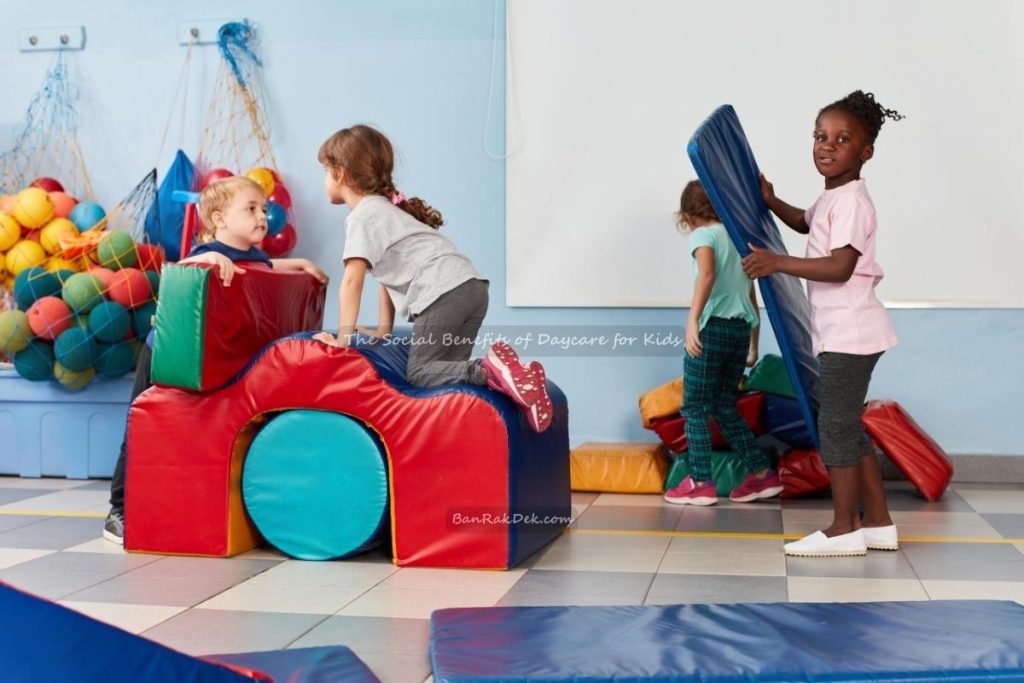
This article explores how daycare contributes to a child’s social growth, setting a strong foundation for future interactions and success in life.
The Social Benefits of Daycare for Kids: Why It Matters
Early childhood is a critical period for social and emotional development. Studies have shown that children who attend daycare develop stronger social skills compared to those who do not. The social benefits of daycare for kids include improved communication, cooperation, and problem-solving abilities.
At daycare, children learn how to interact with their peers, resolve conflicts, and express themselves in a healthy manner. These experiences shape their personalities and help them adapt better to school and social settings in the future.
Enhancing Communication Skills Through Daycare
One of the most significant social benefits of daycare for kids is the development of communication skills. Children in daycare are constantly exposed to conversations, instructions, and group activities that encourage verbal interaction.
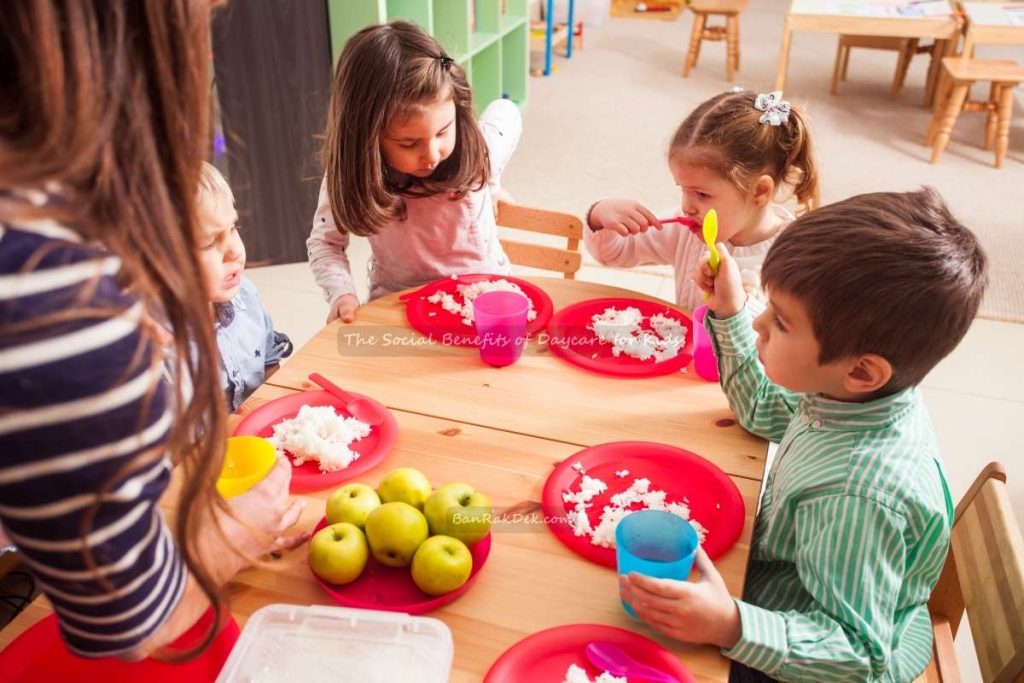
How Daycare Improves Communication:
- Encourages children to express their thoughts and emotions
- Teaches listening skills through group activities and storytelling
- Helps in learning new words and expanding vocabulary
- Promotes non-verbal communication such as facial expressions and body language
By interacting with caregivers and other children daily, kids learn how to express their needs, share experiences, and understand social cues. These skills play a vital role in their personal and academic success.
Boosting Emotional Intelligence and Empathy
Empathy and emotional intelligence are essential for forming healthy relationships and understanding others’ feelings. The social benefits of daycare for kids include fostering emotional awareness and teaching children how to navigate their emotions effectively.
How Daycare Encourages Emotional Intelligence:
- Exposes children to diverse emotions and reactions
- Encourages sharing and cooperation in group activities
- Teaches conflict resolution skills through guided interactions
- Provides emotional support from caregivers and teachers
In a daycare setting, children experience a variety of emotions and learn how to manage them. Whether it’s sharing toys, comforting a friend, or handling disappointment, these interactions help kids develop emotional resilience and empathy.
Developing Cooperation and Teamwork
Another remarkable social benefit of daycare for kids is the ability to work well with others. Cooperation is a fundamental skill that children develop in daycare through structured play, group activities, and collaborative learning.
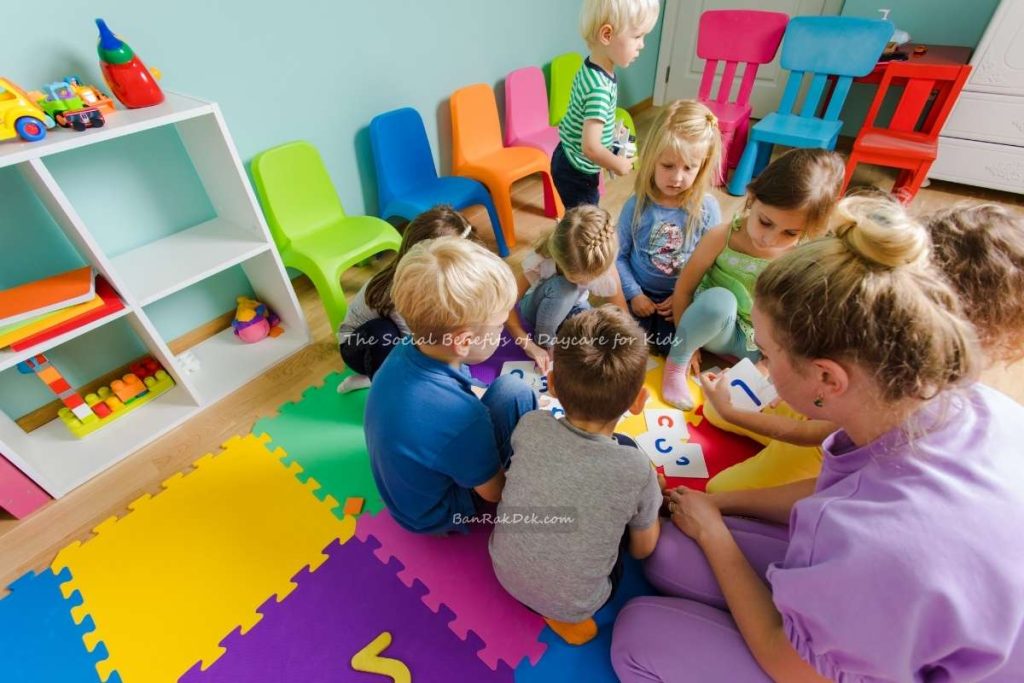
Ways Daycare Fosters Teamwork:
- Group games that require taking turns and following rules
- Problem-solving activities that encourage collective thinking
- Storytelling sessions where children listen and contribute ideas
- Art and craft projects that involve collaboration
These experiences help children understand the importance of working together, respecting others’ opinions, and supporting their peers. Teamwork skills learned in daycare translate to better social interactions in school and beyond.
Encouraging Independence and Confidence
Many parents worry about their child’s ability to function independently, especially before starting school. The social benefits of daycare for kids include fostering independence, which in turn boosts their self-confidence.
How Daycare Builds Independence:
- Encourages children to make choices and decisions
- Teaches self-care tasks such as tidying up and dressing
- Allows kids to explore their interests through play
- Provides opportunities for leadership in group activities
When children feel confident in their abilities, they are more likely to take initiative, engage with peers, and navigate social situations with ease.
Exposure to Diversity and Inclusion
Daycare centers bring together children from different backgrounds, cultures, and experiences, which enhances their understanding of diversity. The social benefits of daycare for kids include fostering inclusivity and teaching respect for differences.
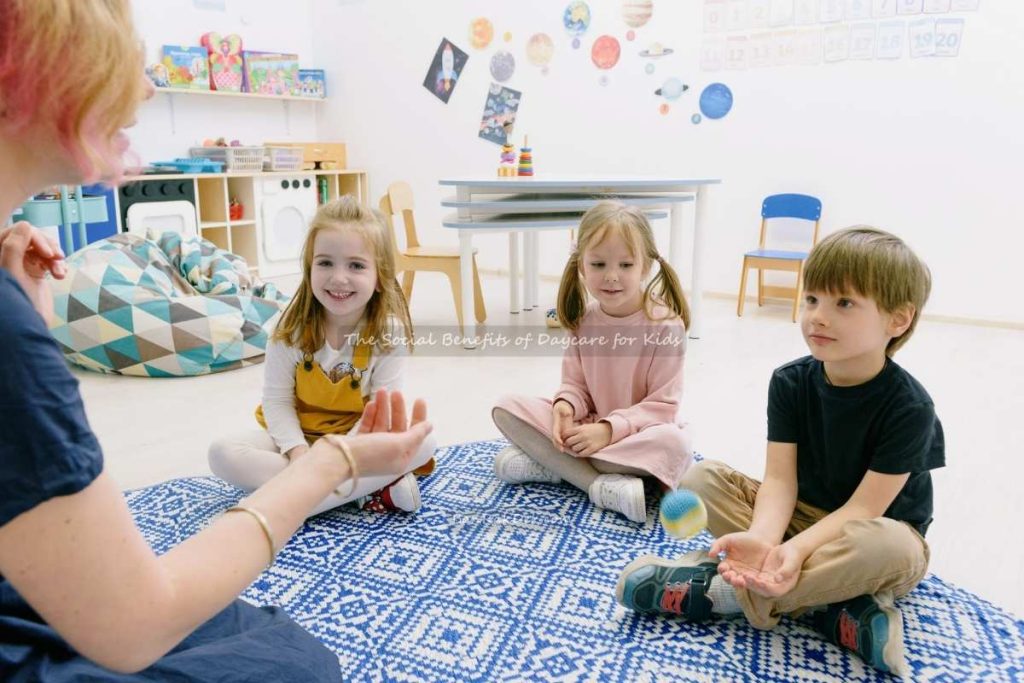
Why Diversity in Daycare Matters:
- Encourages appreciation of different cultures and traditions
- Helps children develop open-mindedness and tolerance
- Teaches respect for different perspectives and beliefs
- Reduces bias and stereotypes at an early age
By interacting with a diverse group of peers, children learn that differences are valuable and that every individual deserves kindness and respect.
Learning Social Etiquette and Manners
Another crucial social benefit of daycare for kids is learning proper social etiquette. From saying “please” and “thank you” to understanding personal space, daycare teaches essential social norms.
Manners and Etiquette Taught in Daycare:
- Greeting and addressing peers politely
- Understanding the importance of sharing and taking turns
- Practicing good table manners during snack time
- Learning to listen attentively and wait for their turn to speak
These foundational social skills help children interact respectfully with others and build strong, positive relationships.
Preparing for School and Future Social Settings
Daycare serves as an excellent transition to formal schooling by preparing children for structured learning environments. The social benefits of daycare for kids include acclimating them to routines, group learning, and authority figures such as teachers.
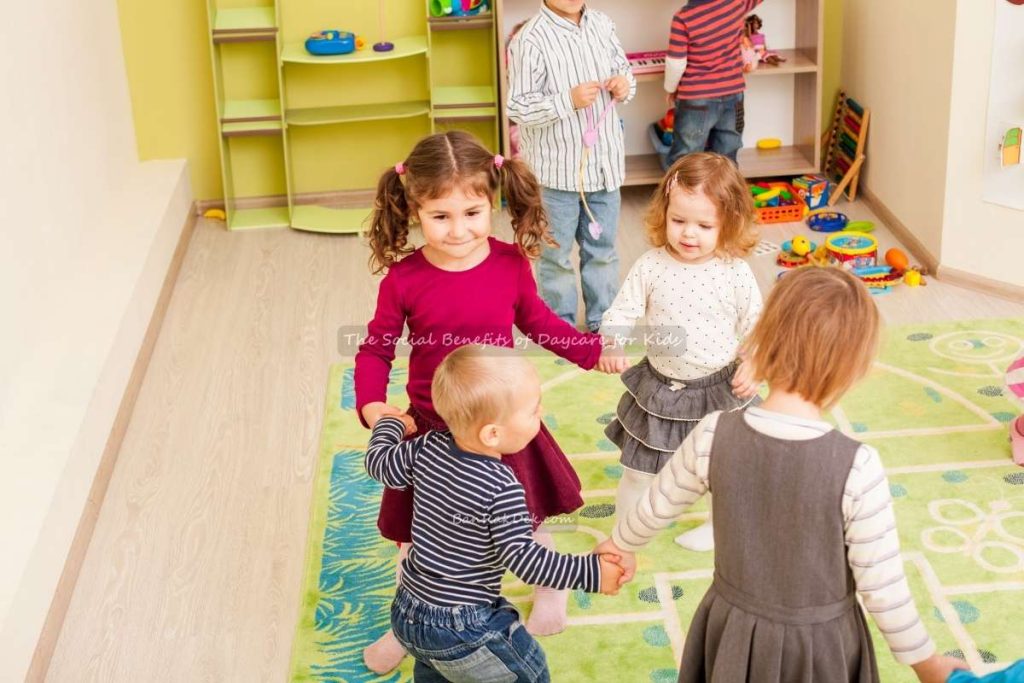
How Daycare Prepares Kids for School:
- Familiarizes them with structured schedules and routines
- Teaches classroom behaviors such as sitting in a group and following instructions
- Encourages independence in completing tasks
- Builds confidence in interacting with teachers and peers
Children who attend daycare often adjust to kindergarten more easily, as they are already accustomed to social settings, structured activities, and classroom dynamics.
Strengthening Problem-Solving and Conflict Resolution Skills
Conflicts are a natural part of social interactions, and daycare provides a safe space for children to learn how to resolve them. The social benefits of daycare for kids include teaching conflict resolution skills that are essential for healthy relationships.
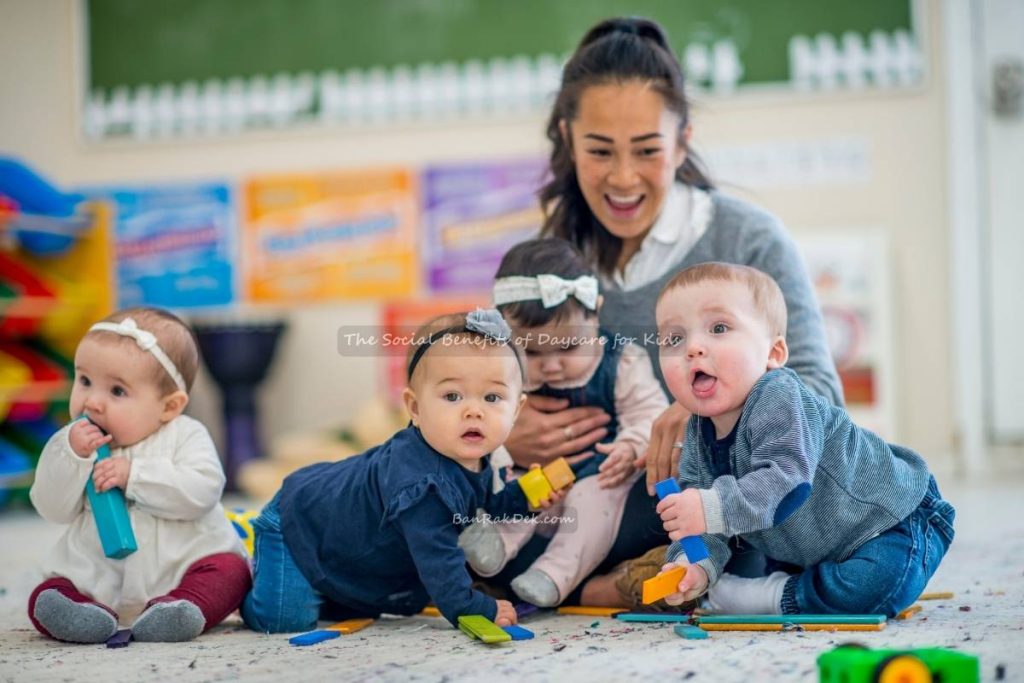
Conflict Resolution Strategies in Daycare:
- Encouraging children to express their feelings calmly
- Teaching negotiation and compromise through guided discussions
- Helping kids understand different perspectives
- Using role-playing activities to practice problem-solving
These experiences equip children with the skills needed to handle disagreements constructively, fostering better relationships in the long run.
Conclusion
The social benefits of daycare for kids are undeniable. From enhancing communication skills and emotional intelligence to fostering teamwork, independence, and problem-solving abilities, daycare plays a crucial role in shaping a child’s social development.
By providing a structured yet nurturing environment, daycare helps children build the confidence, empathy, and cooperation needed for lifelong success. As parents consider childcare options, it’s essential to recognize that daycare is not just about supervision—it’s a powerful tool for early social growth and development.
Investing in daycare is an investment in a child’s future, equipping them with the skills they need to thrive socially, emotionally, and academically. So, if you’re considering daycare for your little one, rest assured that you’re giving them a strong foundation for a bright and socially enriched future.
FAQ – Social Benefits of Daycare for Kids
What are the main social benefits of daycare for kids?
The social benefits of daycare for kids include improved communication skills, enhanced emotional intelligence, better teamwork abilities, and stronger problem-solving skills. These benefits help children develop confidence and adapt easily to social environments.
How does daycare improve communication skills in children?
Daycare encourages verbal interaction through group activities, storytelling, and play. Kids learn to express themselves, listen attentively, and interpret social cues, all of which enhance their communication skills.
Can daycare help children develop emotional intelligence?
Yes! One of the significant social benefits of daycare for kids is the development of emotional intelligence. Children learn to recognize emotions, show empathy, and handle social conflicts in a healthy manner.
How does daycare prepare children for school?
Daycare familiarizes children with structured routines, group learning, and interactions with teachers and peers. This helps them transition smoothly into formal schooling with confidence and social readiness.
Does daycare promote teamwork and cooperation?
Absolutely! Daycare encourages children to participate in group activities, share resources, and work together on tasks, which strengthens their teamwork and cooperation skills.
How does daycare help kids become more independent?
Daycare teaches children self-care tasks, decision-making, and responsibility, helping them gain confidence and independence in their daily activities.
Is daycare beneficial for children’s conflict resolution skills?
Yes, one of the social benefits of daycare for kids is learning how to handle conflicts constructively. Through guided interactions, kids learn negotiation, compromise, and problem-solving techniques.
How does daycare expose children to diversity?
Daycare centers bring together children from different backgrounds, helping them appreciate diversity, develop tolerance, and learn to respect different perspectives.
Can daycare improve a child’s manners and social etiquette?
Definitely! Kids in daycare learn essential social manners like saying “please” and “thank you,” waiting their turn, and respecting personal space, all of which contribute to positive social interactions.
Are children who attend daycare more socially confident?
Yes, children who attend daycare tend to be more socially confident as they are exposed to regular peer interactions, structured activities, and new social situations that build their confidence over time.