- Introduction
- Preschool Learning Is More Than Academic Work
- Learning Through Play
- The Importance Of Language Development
- Reading With Preschool Children
- Early Writing Skills
- Early Maths Through Everyday Activities
- Creative Activities
- Physical Development
- Social Skills
- Emotional Development
- Independence Skills
- Routines Help Children Learn
- Learning To Follow Instructions
- Attention And Concentration
- Sensory Play
- Outdoor Learning
- Screen Time And Digital Learning
- Worksheets And Formal Lessons
- School Readiness
- Choosing A Preschool Programme
- Communicating With Preschool Teachers
- Supporting Learning At Home
- Following The Child’s Interests
- Praise, Encouragement, And Mistakes
- Avoid Comparing Children
- When Parents May Need Additional Guidance
- Common Preschool Learning Mistakes
- A Simple Daily Learning Routine
- Conclusion
- FAQ
- What Is Preschool Learning?
- Does Preschool Learning Need Worksheets?
- How Can Parents Support Preschool Learning At Home?
- Is Play Really A Form Of Learning?
- Should Preschool Children Be Able To Read?
- What Maths Skills Should Preschoolers Learn?
- How Long Should Preschool Activities Last?
- What Does School Readiness Mean?
- How Much Screen Time Should Be Used For Learning?
- When Should Parents Ask For Developmental Advice?
Introduction
Preschool is an important stage when children begin developing the skills they will use at school, at home, and in everyday social situations. However, effective preschool learning does not need to look like formal classroom study.
Young children often learn best by playing, talking, moving, building, drawing, singing, pretending, observing, and asking questions. These activities support language, coordination, creativity, confidence, problem-solving, and relationships with other people.
The purpose of preschool learning is not to make every child read, write, or calculate as early as possible. It is to create a safe and interesting environment where children can explore ideas, practise new skills, and gradually become more independent.
Every child develops at a different pace. One preschooler may enjoy letters and books, while another may be more interested in climbing, building, music, or imaginative play. Parents can support development by offering varied experiences without turning every activity into a test.
This guide explains what parents should know about preschool learning, including play, language, early maths, creativity, physical development, social skills, routines, school readiness, and choosing suitable activities.
👉 “Parents exploring preschool options may also find this Family Education guide for Thailand helpful for understanding broader learning choices and everyday support.”
Preschool Learning Is More Than Academic Work
Some parents hear the word learning and immediately think about reading, writing, numbers, and worksheets. These skills can have a place in early childhood, but they are only part of the picture.
Good preschool learning may also include:
- Learning to wait for a turn
- Asking for help
- Following simple instructions
- Putting toys away
- Using words to describe feelings
- Moving safely around other children
- Holding a pencil or crayon
- Recognising familiar shapes
- Listening to a short story
- Completing a simple puzzle
- Trying again after a mistake
- Playing independently for a short time
These everyday abilities help children participate in family life, group activities, and future classroom routines.
A child does not need to sit at a desk for long periods to learn. Preschoolers often gain more from active, hands-on experiences than from repetitive written exercises.
Learning Through Play
Play is one of the main ways young children understand the world. During play, they make choices, test ideas, copy adults, solve problems, negotiate with other children, and use their imagination.
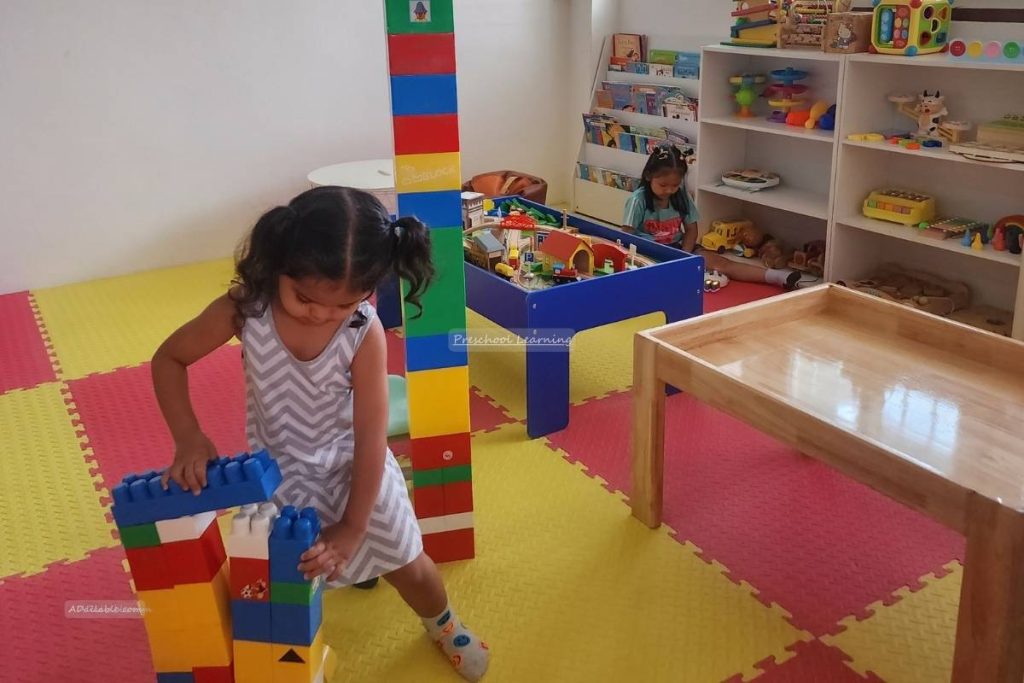
Learning through play can include:
- Building with blocks
- Pretending to run a shop
- Cooking in a toy kitchen
- Caring for dolls
- Sorting objects
- Playing with water
- Drawing pictures
- Making roads for toy cars
- Dressing up
- Singing action songs
Play-based preschool learning gives children room to explore without needing one correct answer.
For example, building a tower can involve balance, size, counting, patience, and problem-solving. Pretending to operate a restaurant can involve language, social skills, memory, organisation, and creativity.
Parents can support play by providing simple materials and allowing enough uninterrupted time. Expensive toys are not always necessary. Boxes, paper, safe household items, recycled materials, blocks, and art supplies can offer many possibilities.
The Importance Of Language Development
Language helps children express needs, understand instructions, build relationships, and learn about new ideas.
Parents can support language during ordinary routines by:
- Talking about what the child is doing
- Naming objects and actions
- Asking open questions
- Reading aloud
- Singing songs
- Repeating new words
- Giving the child time to answer
- Listening without interrupting
- Encouraging storytelling
- Discussing pictures
Useful questions include:
- What do you think will happen next?
- How did you build that?
- Which one is bigger?
- How does the character feel?
- What could we try now?
These questions make preschool learning more interactive than questions that only require yes or no.
Children growing up with more than one language may mix words or understand more than they can say. This can be a normal part of multilingual development. Families can continue speaking the languages they use naturally and consistently.
Reading With Preschool Children
Reading aloud is one of the simplest ways to support vocabulary, listening, imagination, and an early interest in books.
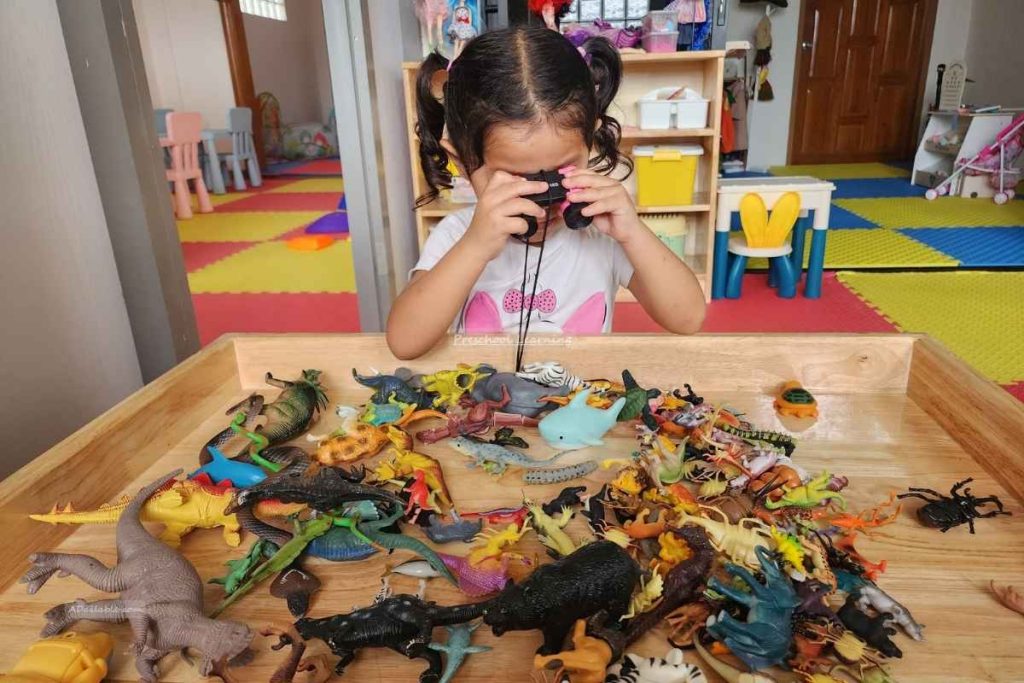
A reading routine does not need to be long. Ten calm minutes can be more useful than forcing a tired child to listen for half an hour.
To make reading part of preschool learning:
- Let the child choose books
- Point to pictures
- Talk about the cover
- Ask what may happen next
- Connect the story to real life
- Repeat favourite books
- Allow the child to turn pages
- Use different voices
- Pause for questions
- Keep books within reach
Repeated reading is valuable. Adults may become tired of the same story, but children often learn new words, patterns, and details through repetition.
Parents should not worry if a preschooler cannot read independently. Enjoying stories, understanding that print carries meaning, and learning how books work are important early literacy skills.
Early Writing Skills
Before children can write letters clearly, they need hand strength, coordination, visual attention, and control of small movements.
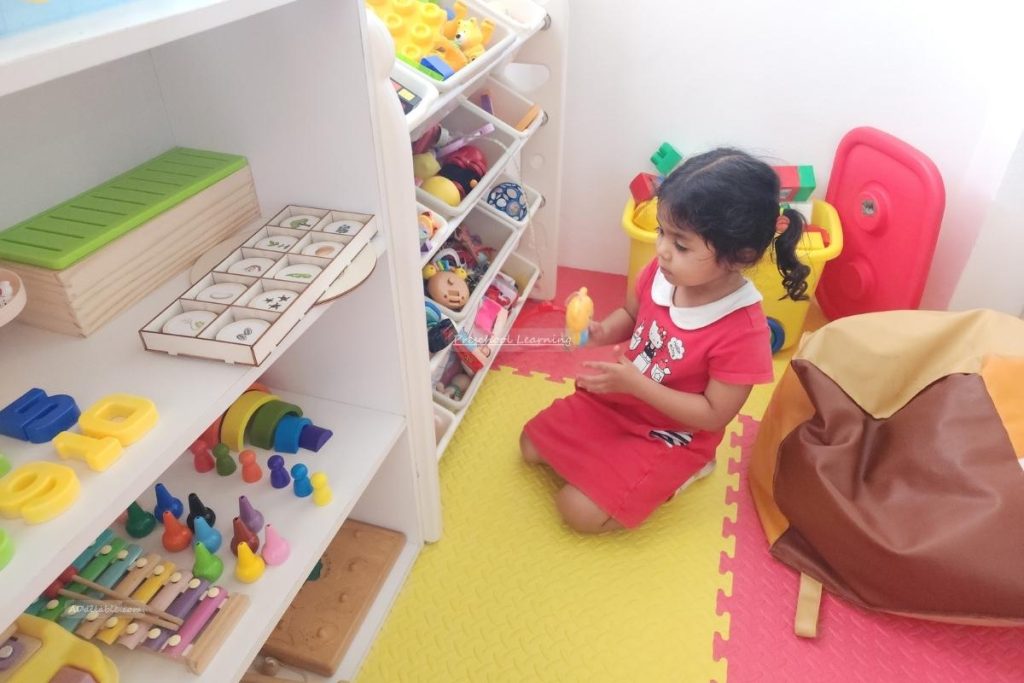
Activities that support early writing include:
- Drawing
- Colouring
- Painting
- Using modelling dough
- Threading large beads
- Building with small blocks
- Using child-safe scissors
- Picking up small objects with tongs
- Making marks in sand
- Completing simple puzzles
These activities strengthen fine motor skills and prepare the hands for writing.
During preschool learning, children may begin by drawing lines, circles, and shapes before forming recognisable letters.
Parents can offer crayons, pencils, chalk, and washable markers without correcting every mark. The aim is to build control and confidence.
Early Maths Through Everyday Activities
Early maths is not only about writing numbers. Preschoolers develop mathematical understanding by comparing, sorting, matching, counting, measuring, and noticing patterns.
Everyday preschool learning may involve:
- Counting steps
- Sorting toys by colour
- Comparing large and small objects
- Sharing snacks
- Matching socks
- Building patterns
- Measuring ingredients
- Identifying shapes
- Talking about more and less
- Putting objects in order
Parents can introduce maths naturally during meals, shopping, cleaning, dressing, and play.
For example:
- How many bananas are in the bowl?
- Which cup is taller?
- Can you find two red blocks?
- Who has more crackers?
- What shape is this plate?
The goal is to make numbers and patterns meaningful rather than relying only on memorisation.
Creative Activities
Creative expression allows children to communicate ideas that they may not yet be able to explain with words.
Useful activities include:
- Painting
- Drawing
- Collage
- Music
- Dancing
- Clay
- Crafting
- Storytelling
- Puppet play
- Dress-up games
Creative preschool learning does not require every project to produce a perfect result. The process is often more important than the finished picture or model.
Parents can encourage creativity by saying:
- Tell me about your picture.
- How did you choose these colours?
- What could we add?
- What is happening in your story?
Avoid taking over the project to make it look more attractive. Children gain confidence when their work remains their own.
Physical Development
Preschoolers need opportunities to run, climb, jump, balance, throw, catch, crawl, and move in different ways.
These activities support gross motor skills, coordination, confidence, and body awareness.
Physical preschool learning can include:
- Playground visits
- Dancing
- Simple obstacle courses
- Ball games
- Balance activities
- Animal walks
- Tricycle riding
- Swimming with supervision
- Movement songs
- Outdoor nature walks
Children should also have quieter activities for their hands, such as puzzles, drawing, construction toys, and clay.
A balanced routine includes both large and small movements.
Parents should choose activities that match the child’s ability and supervise climbing, water play, traffic areas, and unfamiliar equipment.
Social Skills
Preschool is often a child’s first regular experience of spending time with a larger group of children.
Social preschool learning may involve:
- Sharing materials
- Waiting for a turn
- Joining a game
- Asking to use a toy
- Listening to another child
- Coping with disappointment
- Solving simple disagreements
- Following group routines
- Respecting personal space
Young children are still learning these skills and may need repeated support.
Instead of expecting children to solve every conflict alone, adults can help them find suitable words:
- I am using this now.
- Can I have a turn next?
- Please stop.
- Let us build together.
- I feel upset.
Children need time and practice to understand that other people have different feelings, needs, and ideas.
Emotional Development
Preschoolers can experience strong emotions but may not yet know how to explain or manage them.
Parents can support emotional preschool learning by helping children name feelings such as:
- Happy
- Sad
- Angry
- Worried
- Excited
- Frustrated
- Tired
- Disappointed
- Proud
Adults can acknowledge the feeling while still keeping limits:
“You are angry because playtime ended. It is okay to feel angry, but we cannot hit.”
This teaches that feelings are acceptable while harmful behaviour is not.
Calm routines, predictable responses, and simple choices can help children feel more secure.
Independence Skills
Preschoolers often want to do things by themselves. Allowing safe independence can support confidence and responsibility.
Useful skills include:
- Putting on simple clothing
- Washing hands
- Carrying a small bag
- Putting toys away
- Eating with utensils
- Pouring a small drink
- Choosing between two options
- Helping prepare snacks
- Following a simple routine
Independence is an important part of preschool learning, but children still need supervision and assistance.
Parents can break tasks into small steps and allow extra time. Taking over because it is faster may reduce opportunities for practice.
Praise effort rather than expecting perfection.
Routines Help Children Learn
Predictable routines help preschool children understand what will happen next. This can reduce stress and make transitions easier.
A daily routine may include:
- Waking up
- Breakfast
- Getting dressed
- Play
- Preschool or family activities
- Lunch
- Quiet time
- Outdoor movement
- Dinner
- Bath
- Reading
- Bedtime
Routines support preschool learning because children practise sequencing, responsibility, and time awareness.
The schedule does not need to be rigid. Families can keep a general pattern while remaining flexible when plans change.
Visual schedules with pictures can help children understand the order of activities.
Learning To Follow Instructions
The ability to listen and follow directions develops gradually.
Begin with simple one-step instructions:
- Put the cup on the table.
- Bring your shoes.
- Sit beside me.
- Choose one book.
When the child manages these comfortably, try two connected steps:
- Put away the blocks and bring your bag.
- Wash your hands and sit at the table.
During preschool learning, instructions should be clear, short, and suitable for the child’s age.
Get the child’s attention before speaking and avoid giving several instructions from another room.
Praise cooperation specifically:
“Thank you for putting the crayons back in the box.”
Attention And Concentration
Preschool children generally have shorter attention spans than older children. Their ability to focus also depends on interest, sleep, hunger, noise, and activity level.
Parents can support attention by:
- Choosing age-appropriate activities
- Reducing distractions
- Keeping instructions short
- Offering movement breaks
- Following the child’s interests
- Gradually increasing activity length
- Avoiding unnecessary pressure
A child may focus for a long time on building blocks but only briefly on a worksheet. This does not always mean there is a problem. Interest plays a major role in preschool learning.
Short, successful activities can build confidence more effectively than long sessions filled with correction.
Sensory Play
Sensory play gives children opportunities to explore texture, sound, movement, colour, temperature, and other physical qualities.
Activities may include:
- Water play
- Sand play
- Modelling dough
- Rice or pasta trays
- Finger painting
- Nature collections
- Music
- Safe scented materials
- Sorting textured objects
Sensory preschool learning can support vocabulary, fine motor skills, curiosity, and concentration.
Parents should choose materials that are safe for the child’s age. Small objects may be unsuitable for children who still place items in their mouths.
Food allergies, skin sensitivity, and choking risks should also be considered.
Outdoor Learning
Children can learn a great deal outdoors. Parks, gardens, playgrounds, and neighbourhood walks offer opportunities to notice plants, animals, weather, sounds, shapes, and movement.
Outdoor preschool learning may include:
- Collecting leaves
- Watching insects
- Counting birds
- Comparing stones
- Drawing with chalk
- Looking for colours
- Listening to sounds
- Discussing weather
- Walking on different surfaces
- Caring for plants
Outdoor time also gives children space for larger movements that may not be possible indoors.
In hot climates, families should choose cooler times of day, provide water, use sun protection, and take regular breaks.
Screen Time And Digital Learning
Digital tools can support some forms of learning, but they should not replace active play, conversation, movement, sleep, books, and relationships.
When choosing digital content:
- Check the age recommendation
- Watch together when possible
- Choose slow, clear programmes
- Avoid constant advertising
- Talk about what happens
- Connect content with real activities
- Stop before bedtime
- Set consistent limits
For example, after watching a short programme about animals, families can draw the animals, read a related book, or visit a park.
Digital preschool learning is more useful when adults help children connect what they see on screen with real experiences.
Worksheets And Formal Lessons
Worksheets may be useful in small amounts for some children, but they should not dominate early learning.
Preschoolers usually benefit more from:
- Hands-on materials
- Movement
- Conversation
- Pretend play
- Real objects
- Music
- Art
- Outdoor exploration
A worksheet that asks children to circle shapes may practise recognition, but finding shapes around the home can make the concept more meaningful.
Effective preschool learning should remain varied and active. Children should not be expected to complete long pages of repetitive work.
School Readiness
School readiness is broader than knowing letters and numbers.
A child preparing for school may benefit from being able to:
- Separate from a caregiver for a period
- Follow simple routines
- Ask for help
- Use the toilet with suitable independence
- Listen to a short story
- Sit with a group briefly
- Carry personal belongings
- Cooperate with adults
- Play near or with other children
- Manage simple self-care tasks
These skills develop gradually through everyday preschool learning.
Children do not need to master everything before starting school. Teachers expect differences in development and experience.
Choosing A Preschool Programme
Families may choose between preschools with different languages, teaching styles, schedules, class sizes, and facilities.
When visiting a programme, observe:
- How teachers speak to children
- Whether children appear engaged
- How conflicts are handled
- Whether play is included
- Whether activities suit the age group
- Cleanliness and safety
- Toilets and handwashing
- Outdoor or movement opportunities
- Communication with parents
- Staff qualifications
- Child supervision
- Rest routines
A strong preschool learning environment should feel safe, respectful, welcoming, and developmentally appropriate.
Bright decorations and expensive equipment are less important than skilled adults who understand young children.
Communicating With Preschool Teachers
Parents and teachers can work together by sharing relevant information about the child.
Useful topics include:
- Interests
- Languages spoken at home
- Allergies
- Health needs
- Sleep
- Toilet routines
- Family changes
- Behaviour concerns
- Strengths
- Areas needing support
Ask teachers how the child participates, communicates, plays, and handles routines.
Avoid focusing only on whether the child can write letters or count. Social confidence, curiosity, communication, movement, and independence are also central to preschool learning.
Supporting Learning At Home
Parents do not need to recreate a classroom at home.
Simple ways to support preschool learning include:
- Reading together
- Talking during meals
- Counting everyday objects
- Letting children help with cooking
- Singing songs
- Going for walks
- Providing drawing materials
- Building with blocks
- Sorting laundry
- Watering plants
- Playing pretend
- Completing puzzles
Household routines contain many natural learning opportunities.
Cooking can involve measuring, following steps, vocabulary, safety, and patience. Laundry can involve matching, sorting, colour, and size. Shopping can involve counting, making choices, and recognising familiar products.
Following The Child’s Interests
Children are more likely to engage when activities connect with something they already enjoy.
A child interested in vehicles might explore:
- Counting cars
- Building roads
- Reading transport books
- Drawing buses
- Sorting vehicles by size
- Visiting a station
- Pretending to drive
A child interested in animals might explore:
- Animal stories
- Movement games
- Matching pictures
- Drawing habitats
- Learning animal sounds
- Visiting a suitable nature centre
Following interests can make preschool learning more meaningful while still introducing new skills.
Praise, Encouragement, And Mistakes
Children need encouragement, but praise is most useful when it focuses on effort, process, and persistence.
Instead of only saying “Good job,” try:
- You kept trying.
- You used many colours.
- You found another way.
- You waited for your turn.
- You put all the pieces together.
- You asked for help calmly.
Mistakes are part of preschool learning. Adults can model a calm response by saying:
“That did not work. Let us try something different.”
Children who are afraid of being wrong may become reluctant to attempt new tasks.
Avoid Comparing Children
Children develop at different rates. Comparing siblings, classmates, or friends can create unnecessary pressure.
One child may speak early but need more time with physical coordination. Another may be very social but less interested in drawing or letters.
Parents can focus on:
- Individual progress
- Effort
- Interests
- Confidence
- New skills
- Areas where support is needed
Preschool learning should support the whole child rather than create competition.
If parents have concerns about development, it is better to speak with a qualified professional than to rely on comparisons with another child.
When Parents May Need Additional Guidance
Consider seeking professional advice when a child:
- Loses skills they previously had
- Has major difficulty communicating needs
- Rarely responds to sounds or interaction
- Has ongoing movement difficulties
- Struggles significantly with eating or sleeping
- Shows extreme distress in ordinary situations
- Has frequent hearing or vision concerns
- Has behaviour that creates serious safety risks
- Is not progressing in ways that concern caregivers or teachers
Development varies, and one sign alone does not confirm a problem.
Early discussion with a paediatrician, child-development specialist, speech professional, or another qualified provider may help families understand what support is appropriate.
Common Preschool Learning Mistakes
Parents may unintentionally make learning more difficult by:
- Expecting formal academic work too early
- Comparing children
- Correcting every mistake
- Scheduling too many classes
- Ignoring play
- Giving activities that are too difficult
- Taking over creative projects
- Using screens as the main learning method
- Expecting long concentration
- Focusing only on letters and numbers
- Removing all opportunities for independence
- Treating learning as a competition
Balanced preschool learning should include play, rest, movement, conversation, creativity, and secure relationships.
A Simple Daily Learning Routine
A flexible home routine could include:
- Reading after breakfast
- Free play
- A simple household task
- Outdoor movement
- Lunch
- Quiet time
- Drawing or craft
- Pretend play
- Music
- A bedtime story
The routine does not need to include every activity every day.
A few calm, enjoyable experiences can support preschool learning more effectively than a crowded schedule.
Parents can rotate toys and materials rather than making everything available at once. This may reduce clutter and renew interest.
👉 “Parents interested in supporting early development may also explore this practical approach to learning through play for simple ideas that make everyday activities more educational.”
Conclusion
Effective preschool learning is built through play, conversation, movement, creativity, routines, relationships, and everyday experiences. It is not limited to worksheets, early reading, or memorising numbers.
Children learn when they build, pretend, ask questions, listen to stories, help with simple tasks, explore outdoors, create art, and interact with other people.
Parents can support preschool learning by providing safe choices, following the child’s interests, encouraging effort, and allowing time for independence. Activities should match the child’s age, ability, energy, and development.
A good preschool or home-learning environment should help children feel secure, curious, respected, and willing to try. Academic skills will develop more naturally when children also have strong language, movement, social, emotional, and self-care foundations.
There is no need to rush childhood. A balanced approach to preschool learning helps children develop useful skills while still giving them time to play, imagine, rest, and enjoy being young.
FAQ
What Is Preschool Learning?
Preschool learning includes language, movement, creativity, problem-solving, social skills, emotional development, independence, early literacy, early maths, and learning through play.
Does Preschool Learning Need Worksheets?
No. Worksheets can be used occasionally, but young children usually learn more effectively through play, conversation, movement, real objects, art, books, and everyday routines.
How Can Parents Support Preschool Learning At Home?
Parents can read aloud, talk with their child, count everyday objects, cook together, draw, sing, build, explore outdoors, complete puzzles, and encourage pretend play.
Is Play Really A Form Of Learning?
Yes. Play helps children practise language, decision-making, imagination, coordination, social interaction, persistence, and problem-solving.
Should Preschool Children Be Able To Read?
Some preschoolers begin recognising letters or simple words, while others do not. Enjoying books, listening to stories, building vocabulary, and understanding that print has meaning are important early skills.
What Maths Skills Should Preschoolers Learn?
Useful early maths skills include counting, sorting, matching, comparing sizes, recognising shapes, noticing patterns, and understanding simple ideas such as more, less, first, and last.
How Long Should Preschool Activities Last?
The length depends on the child and activity. Short, successful sessions are usually better than forcing a child to continue after losing interest or becoming tired.
What Does School Readiness Mean?
School readiness includes communication, simple self-care, following routines, asking for help, playing with others, listening briefly, and handling separation, not only academic knowledge.
How Much Screen Time Should Be Used For Learning?
Digital content should be limited and should not replace active play, conversation, books, movement, sleep, and relationships. Watching together and discussing the content can make it more useful.
When Should Parents Ask For Developmental Advice?
Parents should seek guidance when they notice loss of skills, significant communication or movement concerns, serious behavioural difficulties, or anything that worries both caregivers and teachers.