- Introduction
- Treat Everyday Life As A Learning Opportunity
- Follow The Child’s Interests
- Keep Learning Activities Short
- Use Play As The Main Learning Tool
- Allow Child-Led Play
- Talk Throughout The Day
- Ask Open Questions
- Read Together Regularly
- Make Reading Interactive
- Tell Family Stories
- Build Vocabulary Naturally
- Support More Than One Language
- Introduce Early Maths Through Real Objects
- Count With Meaning
- Explore Shapes And Position
- Use Sorting Activities
- Encourage Drawing And Mark-Making
- Support Fine Motor Skills
- Include Music And Rhythm
- Encourage Physical Learning
- Learn Outdoors
- Invite Children To Help At Home
- Use Cooking As A Learning Activity
- Encourage Problem-Solving
- Treat Mistakes As Part Of Learning
- Praise Specifically
- Build Independence Gradually
- Offer Limited Choices
- Create A Simple Learning Space
- Reduce Unnecessary Distractions
- Use Screens Purposefully
- Protect Time For Rest
- Adapt Activities To Development
- Avoid Comparing Children
- Work With Nursery Or School
- Create A Simple Weekly Rhythm
- Common Learning Mistakes
- A Simple Everyday Learning Checklist
- Conclusion
- FAQ
- What Are The Best Learning Tips For Children At Home?
- How Long Should A Learning Activity Last?
- Do Children Need Educational Toys?
- How Can Parents Support Language Development?
- How Can Children Learn Early Maths?
- Is Play Really A Form Of Learning?
- Should Parents Correct Every Mistake?
- How Can I Help My Child Concentrate?
- Should Learning Continue During Weekends?
- When Should Parents Ask For Professional Advice?
Introduction
Learning does not happen only in classrooms, workbooks, or organised lessons. Young children learn while talking, playing, eating, dressing, walking, asking questions, helping at home, and watching the people around them.
The most useful learning tips for children often fit naturally into everyday family life. Parents do not need expensive educational toys, complicated schedules, or hours of formal teaching. A short conversation, shared story, sorting activity, or walk outside can offer meaningful learning.
Every child develops at an individual pace. Some children enjoy talking and storytelling, while others learn more comfortably through movement, building, drawing, music, or practical activities. A flexible approach allows parents and caregivers to follow the child’s interests while introducing new experiences gradually.
This guide shares simple learning tips for children that support language, early maths, creativity, physical development, problem-solving, confidence, concentration, and independence.
👉 “Parents interested in supporting children’s everyday learning may also explore this guide to early childhood education in Thailand for broader context on learning and development.”
Treat Everyday Life As A Learning Opportunity
Daily routines contain many small opportunities for learning.
A child can practise:
- Counting spoons before a meal
- Naming colours while getting dressed
- Comparing large and small objects
- Following simple instructions
- Sorting clean clothes
- Talking about the weather
- Recognising signs and symbols
- Remembering the next step in a routine
These activities do not need to feel like lessons. Children often learn best when the skill has a practical purpose.
One of the simplest learning tips for children is to involve them in ordinary tasks instead of completing everything for them.
Follow The Child’s Interests
Children usually concentrate longer when an activity connects with something they already enjoy.
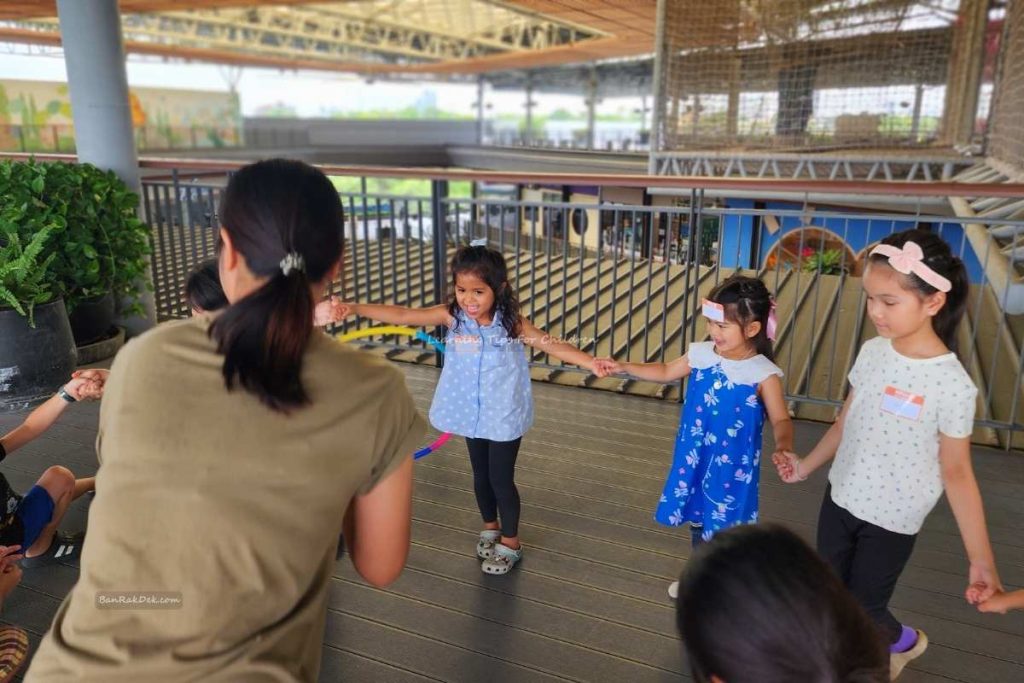
A child interested in animals might enjoy:
- Animal stories
- Matching animal pictures
- Making animal sounds
- Counting toy animals
- Drawing habitats
- Visiting a park or farm
- Talking about what animals eat
A child interested in vehicles might enjoy sorting cars by colour, building roads, counting wheels, or discussing where different vehicles travel.
Following an interest does not mean allowing the child to avoid everything unfamiliar. It means using a familiar subject as a bridge toward new skills.
Keep Learning Activities Short
Young children do not need long formal sessions.
A useful activity may last:
- Five minutes
- Ten minutes
- Until the child loses interest
- Long enough to complete one simple goal
Stopping while the experience is still positive may make the child more willing to return later.
Effective learning tips for children respect attention span, energy, hunger, mood, and age.
Use Play As The Main Learning Tool
Play gives children opportunities to experiment, communicate, make decisions, and solve problems.
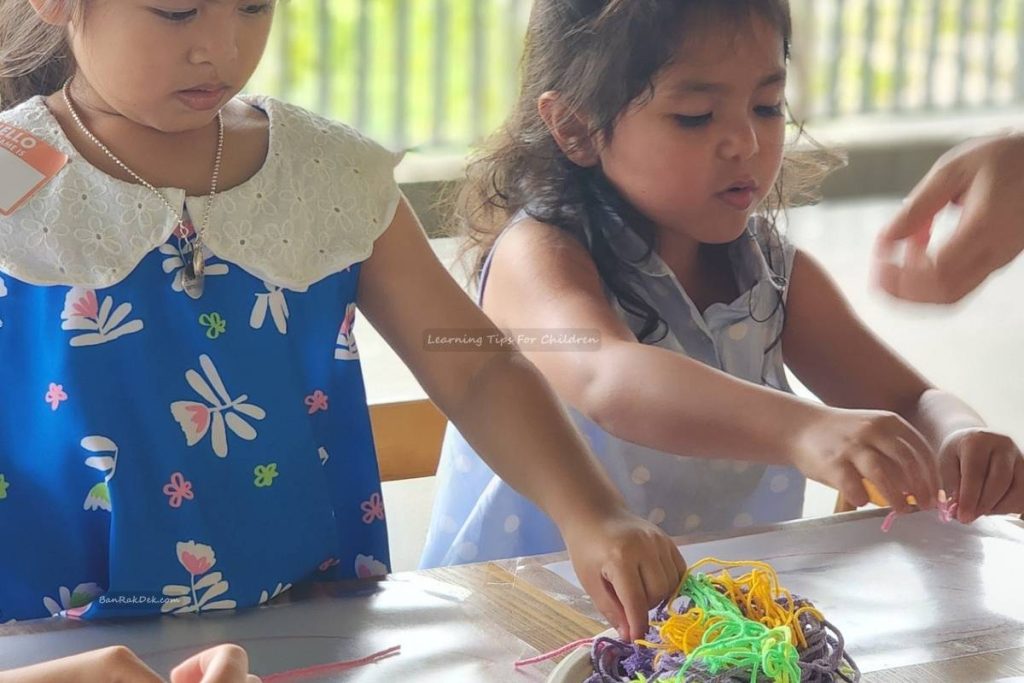
Through play, children may learn:
- How objects work
- How to share space
- How to take turns
- How to use imagination
- How to plan
- How to respond when something fails
- How to communicate ideas
- How to manage frustration
Play-based learning can include blocks, pretend kitchens, dolls, puzzles, water play, drawing, outdoor movement, and simple household objects.
The adult does not need to control every part of the activity.
Allow Child-Led Play
During child-led play, the child decides what to build, imagine, or explore.
The adult can:
- Observe
- Join when invited
- Comment on what is happening
- Ask an occasional question
- Provide safe materials
- Avoid correcting every detail
For example, if a child says a block is a telephone, there is no need to explain that it is not a real telephone. The imagined use is part of creative thinking.
Child-led play is one of the most flexible learning tips for children because it supports several skills at the same time.
Talk Throughout The Day
Conversation supports vocabulary, listening, memory, and social understanding.
Parents can talk about:
- What they are doing
- What the child notices
- What happened earlier
- What may happen next
- How something feels
- Why a simple choice was made
Instead of asking only questions, add comments.
For example:
“The banana is soft and yellow.”
“The bus stopped because people need to get on.”
“You placed the large block underneath the small block.”
This gives the child language without making every conversation feel like a test.
Ask Open Questions
Questions with more than one possible answer can encourage thinking.
Try asking:
- “What do you think will happen?”
- “How could we fix this?”
- “What did you notice?”
- “Which one would you choose?”
- “Why do you think it fell?”
- “What could we use instead?”
Young children may need time to answer. Avoid asking another question immediately.
Open questions are useful learning tips for children, but too many questions can feel like an interview. Balance questions with normal conversation.
Read Together Regularly
Reading supports vocabulary, listening, imagination, memory, and knowledge about the world.
A reading routine can be:
- One book before bed
- A short story after lunch
- Picture books during quiet time
- A library visit each week
- Repeating a favourite book
Children often enjoy hearing the same story many times. Repetition helps them remember words, predict events, and understand the story more deeply.
Make Reading Interactive
Shared reading does not require reading every word exactly.
Parents can:
- Point to pictures
- Name objects
- Pause for predictions
- Let the child turn pages
- Discuss facial expressions
- Connect events to real life
- Invite the child to retell part of the story
For babies and toddlers, simply naming pictures and responding to sounds can be enough.
Interactive reading remains one of the most dependable learning tips for children across different ages.
Tell Family Stories
Stories do not need to come only from books.
Parents can tell simple stories about:
- A family outing
- A childhood memory
- Something funny that happened
- A pet
- A grandparent
- The child’s first day somewhere
- A made-up character
Family stories help children understand sequence, time, relationships, and personal identity.
Invite the child to add details or tell the story in their own way.
Build Vocabulary Naturally
Introduce useful words during real activities.
During cooking, use words such as:
- Mix
- Pour
- Full
- Empty
- Smooth
- Rough
- Heavy
- Light
During outdoor play, introduce:
- Under
- Behind
- Beside
- Fast
- Slow
- Wet
- Dry
- Narrow
- Wide
Words are easier to understand when children can see or experience their meaning.
Support More Than One Language
Children growing up with more than one language benefit from regular, meaningful exposure.
Families can:
- Speak the language they know best
- Read books in different languages
- Sing familiar songs
- Use everyday phrases consistently
- Let relatives speak their strongest language
- Avoid pressuring the child to perform
Mixing languages can occur naturally during multilingual development.
Useful learning tips for children should respect the languages connected to the child’s family, community, and daily life.
Introduce Early Maths Through Real Objects
Early maths is more than recognising numbers.
It includes:
- Counting
- Sorting
- Comparing
- Matching
- Measuring
- Recognising patterns
- Understanding position
- Estimating quantity
Use real objects such as fruit, socks, blocks, spoons, cups, or stones.
For example:
- Count four plates
- Match pairs of socks
- Sort toys by type
- Compare two containers
- Create a colour pattern
- Find which object is longer
Count With Meaning
Children may repeat numbers before understanding quantity.
Help connect words to real amounts by:
- Touching each object while counting
- Moving counted objects into a group
- Asking for two blocks
- Sharing fruit between plates
- Counting steps
- Checking how many people need cups
Avoid worrying when young children make mistakes. Understanding develops gradually through repeated use.
Explore Shapes And Position
Shape and position words can be used throughout the day.
Talk about:
- Circles
- Squares
- Triangles
- Corners
- Straight lines
- Curved lines
- Above
- Below
- Inside
- Outside
- Next to
- Between
A simple search for shapes around the home is an easy example of learning tips for children that require no special equipment.
Use Sorting Activities
Sorting helps children notice similarities and differences.
Children can sort:
- Blocks by colour
- Laundry by family member
- Toys by size
- Buttons by shape
- Leaves by type
- Spoons and forks
- Pictures of animals and vehicles
Let the child create a sorting rule when possible.
Ask:
“How did you decide where each one belongs?”
The explanation may reveal more learning than the final arrangement.
Encourage Drawing And Mark-Making
Drawing supports creativity, hand control, planning, and early writing.
Offer materials such as:
- Crayons
- Pencils
- Chalk
- Washable markers
- Paint
- Large paper
- Reused cardboard
Avoid expecting every picture to look realistic.
Ask the child to tell you about the drawing rather than guessing what it is.
Mark-making, lines, circles, and invented symbols are meaningful stages of development.
Support Fine Motor Skills
Fine motor skills involve controlled use of the hands and fingers.
Activities may include:
- Building with blocks
- Turning book pages
- Threading large beads
- Using child-safe tongs
- Tearing paper
- Playing with dough
- Opening simple containers
- Using spoons
- Drawing
- Completing puzzles
Choose materials appropriate for the child’s age and supervise small objects carefully.
These practical learning tips for children can also support dressing, eating, and later writing skills.
Include Music And Rhythm
Music supports listening, memory, language, movement, and pattern recognition.
Try:
- Singing familiar songs
- Clapping rhythms
- Moving slowly and quickly
- Using simple instruments
- Making sounds with safe household objects
- Pausing music and freezing
- Repeating sound patterns
Children do not need to sing perfectly or follow every movement correctly.
Participation matters more than performance.
Encourage Physical Learning
Children often understand ideas more easily when movement is involved.
Physical activities can teach:
- Direction
- Balance
- Speed
- Distance
- Body awareness
- Listening
- Turn-taking
- Planning
Try instructions such as:
- Walk under the rope
- Stand beside the chair
- Take three steps
- Move slowly
- Jump over the line
- Place the ball inside the box
Movement-based learning tips for children are especially useful for children who find sitting activities difficult.
Learn Outdoors
Outdoor spaces provide changing sights, sounds, textures, and questions.
Children can:
- Collect leaves
- Watch insects
- Compare shadows
- Listen for birds
- Count steps
- Observe clouds
- Find different colours
- Notice wet and dry surfaces
- Draw what they see
The goal is observation rather than memorising facts.
A short walk can become a language, science, movement, and social learning experience.
Invite Children To Help At Home
Household participation supports independence and practical understanding.
Age-appropriate tasks may include:
- Putting toys away
- Carrying napkins
- Matching socks
- Wiping a safe surface
- Watering plants
- Putting clothes in a basket
- Stirring ingredients
- Choosing fruit
- Placing books on a shelf
Tasks should remain manageable and safe.
The result may not be perfect, but participation matters.
Use Cooking As A Learning Activity
Simple food preparation can support:
- Counting
- Measuring
- Following sequences
- Vocabulary
- Sensory exploration
- Fine motor control
- Patience
- Responsibility
Children might wash vegetables, mix ingredients, count pieces, or place toppings.
Close supervision is essential around heat, sharp tools, and small choking hazards.
Cooking provides practical learning tips for children while also involving them in family routines.
Encourage Problem-Solving
When something does not work, avoid fixing it immediately.
Pause and ask:
- “What could you try?”
- “Is there another way?”
- “What do you need?”
- “Why did it fall?”
- “Which piece might fit?”
Offer help when frustration becomes too strong, but allow enough time for the child to experiment.
Problem-solving grows through manageable challenges, not through always receiving the answer.
Treat Mistakes As Part Of Learning
Children may avoid challenges when they fear being wrong.
Adults can respond calmly:
- “That did not work yet.”
- “Let us try another way.”
- “You noticed the problem.”
- “Mistakes help us learn.”
- “Which part should we change?”
Avoid laughing at errors or comparing the child with siblings or classmates.
Positive learning tips for children focus on effort, strategy, and progress rather than perfection.
Praise Specifically
General praise such as “Good job” can be encouraging, but specific comments provide more information.
Try:
- “You kept trying when the puzzle was difficult.”
- “You sorted those by colour.”
- “You remembered to put the book back.”
- “You used a gentle voice.”
- “You found another solution.”
Specific feedback helps the child understand what action was useful.
Build Independence Gradually
Children need opportunities to attempt tasks for themselves.
Depending on age, they may practise:
- Choosing between two outfits
- Putting on simple clothing
- Carrying a small bag
- Pouring water with help
- Tidying one area
- Selecting a book
- Washing hands
- Opening a lunch container
Allow extra time.
Doing everything quickly for the child may reduce opportunities for everyday learning.
Offer Limited Choices
Too many options can overwhelm young children.
Provide two or three suitable choices:
- “Would you like the red or blue cup?”
- “Should we read this book or that one?”
- “Would you like to draw or build?”
- “Should we walk first or water the plants?”
Limited choices support decision-making while keeping the routine manageable.
Create A Simple Learning Space
A useful learning area does not need to look like a classroom.
It may include:
- A small table
- Accessible books
- Paper and crayons
- Building materials
- A puzzle
- A container for supplies
- Comfortable lighting
Rotate some materials instead of displaying everything at once.
A less crowded space may make it easier to choose an activity and concentrate.
Reduce Unnecessary Distractions
Children may find it difficult to focus when television, phones, toys, and loud conversations compete for attention.
For a short activity:
- Turn off background television
- Put unrelated toys away
- Keep instructions simple
- Sit nearby
- Choose a comfortable time
- End before the child becomes exhausted
One of the most realistic learning tips for children is to improve the environment rather than repeatedly telling the child to concentrate.
Use Screens Purposefully
Digital media can be one part of family life, but it should not replace conversation, movement, sleep, hands-on play, or outdoor experiences.
When children use a screen:
- Choose age-appropriate content
- Watch together when possible
- Discuss what is happening
- Connect the content to real life
- Avoid leaving videos playing in the background
- Maintain clear family limits
A child may learn more from a short shared activity than from a long period of passive viewing.
Protect Time For Rest
Learning is harder when a child is tired, hungry, overstimulated, or unwell.
Daily routines should include time for:
- Sleep
- Meals
- Active play
- Quiet play
- Family interaction
- Unstructured time
Not every moment needs to become educational.
Rest, boredom, and free play can support imagination and emotional balance.
Adapt Activities To Development
The same activity can be adjusted for different ages.
For example, while sorting objects:
A younger child may place similar colours together.
An older child may sort by two features, count each group, or explain the rule.
While reading:
A younger child may point to pictures.
An older child may predict events or retell the story.
Age-flexible learning tips for children allow siblings or mixed-age groups to participate together.
Avoid Comparing Children
Children develop different strengths at different times.
One child may speak early but take longer to develop physical confidence. Another may enjoy puzzles but avoid drawing.
Comparisons can create pressure and overlook individual progress.
Instead, compare the child’s current abilities with their own earlier development.
Questions about significant developmental delays should be discussed with an appropriate professional.
Work With Nursery Or School
Parents and caregivers can share helpful information with nursery or school staff.
Ask:
- Which activities interest the child?
- How does the child join group play?
- Which skills are developing?
- What causes frustration?
- Which routines work well?
- Are there concerns about hearing, language, movement, or behaviour?
Use the information to support consistency without recreating the classroom at home.
Home should still include rest, play, and family connection.
Create A Simple Weekly Rhythm
A balanced week might include:
- Shared reading
- Outdoor play
- Drawing or building
- Household participation
- Music and movement
- A simple cooking activity
- Free play
- Quiet conversation
There is no need to schedule a different lesson every day.
Repeating familiar activities allows children to practise and notice new details.
Common Learning Mistakes
Making Every Activity A Test
Constantly asking for correct answers can reduce enjoyment.
Correcting Too Quickly
Children need time to experiment and self-correct.
Choosing Activities That Are Too Difficult
A challenge should be manageable with some effort or support.
Expecting Long Concentration
Young children often learn in short periods.
Comparing Children
Development is not identical for every child.
Buying Too Many Educational Products
Simple household materials can support valuable learning.
Ignoring The Child’s Interests
Interest can provide a useful pathway into new skills.
Overloading The Schedule
Children need rest and unstructured play.
Avoiding these mistakes makes learning tips for children easier to use consistently.
A Simple Everyday Learning Checklist
Parents can ask:
Conversation: Did we talk and listen to each other today?
Reading: Did the child see or hear a story?
Movement: Was there time for active play?
Creativity: Could the child draw, build, imagine, or make something?
Independence: Was there one task the child could attempt?
Curiosity: Did we notice or explore something?
Rest: Was there enough quiet time?
Connection: Did learning feel safe and supportive?
Not every box needs to be completed every day.
👉 “Parents supporting children’s everyday growth may also explore this practical approach to learning through play for more ideas that make everyday activities fun and educational.”
Conclusion
The best learning tips for children are usually simple enough to become part of ordinary family life.
Children learn through conversation, play, reading, movement, creativity, observation, household routines, and relationships. Parents do not need to turn the home into a formal classroom.
Follow the child’s interests while introducing new experiences gradually. Keep activities short, flexible, and appropriate for the child’s energy and development.
Shared reading supports language and imagination. Early maths can grow through counting, sorting, comparing, measuring, and recognising patterns with real objects.
Drawing, building, music, outdoor play, and household participation all provide valuable learning. These activities also help children practise confidence, communication, coordination, and problem-solving.
Useful learning tips for children allow mistakes and experimentation. Avoid correcting every attempt or completing every difficult task immediately.
Create opportunities for independence through small choices and manageable responsibilities. Give specific feedback about effort, ideas, and strategies rather than focusing only on correct results.
Children also need sleep, meals, quiet time, and unstructured play. Not every part of the day must have a planned educational purpose.
When learning tips for children are calm, playful, and connected to real life, learning can become a natural part of everyday growth.
FAQ
What Are The Best Learning Tips For Children At Home?
Use conversation, reading, play, household tasks, drawing, counting, outdoor exploration, and simple problem-solving during ordinary routines.
How Long Should A Learning Activity Last?
It depends on age and interest. For many young children, five to fifteen minutes can be enough for a focused activity.
Do Children Need Educational Toys?
No. Books, blocks, paper, containers, household objects, natural materials, and everyday routines can provide meaningful learning.
How Can Parents Support Language Development?
Talk throughout the day, read together, sing, tell stories, introduce useful words, and give the child time to respond.
How Can Children Learn Early Maths?
Count real objects, sort items, compare sizes, notice patterns, discuss shapes, and use position words during play and routines.
Is Play Really A Form Of Learning?
Yes. Play supports communication, imagination, problem-solving, movement, social skills, planning, and emotional development.
Should Parents Correct Every Mistake?
No. Give children time to notice problems, experiment, and try another approach. Offer help when the challenge becomes too frustrating.
How Can I Help My Child Concentrate?
Choose a comfortable time, reduce background distractions, keep the activity short, and select something connected to the child’s interests.
Should Learning Continue During Weekends?
Learning naturally continues through outings, family conversations, cooking, play, and everyday experiences. Formal activities are not necessary every day.
When Should Parents Ask For Professional Advice?
Speak with an appropriate healthcare or education professional when there are persistent concerns about language, hearing, movement, learning, behaviour, or overall development.