- Introduction
- What Picky Eating May Look Like
- Why Picky Eating Happens
- Look At Eating Across Several Days
- Respect Hunger And Fullness
- Avoid The Clean-Plate Rule
- Keep Meals And Snacks Predictable
- Create A Calm Mealtime Routine
- Check The Child’s Seating
- Begin With Small Portions
- Include One Familiar Food
- Avoid Preparing Several Replacement Meals
- Offer New Foods Repeatedly
- Space Out Repeated Offers
- Do Not Force A Taste
- Avoid Using Dessert As A Reward
- Avoid Calling The Child Picky
- Model Eating Calmly
- Eat Together When Possible
- Let Children Help Prepare Food
- Offer Limited Choices
- Consider Texture Preferences
- Serve Mixed Foods Carefully
- Do Not Hide Every New Ingredient
- Introduce Variety Gradually
- Look At The Whole Diet
- Include Protein And Iron Sources
- Watch Excessive Milk Intake
- Use Snacks Wisely
- Keep Drinks Simple
- Keep Mealtimes Reasonably Short
- Respond Calmly To Food Throwing
- Work With Nursery Caregivers
- Avoid Negative Comparisons
- Recognise Sensory Preferences
- When Picky Eating May Need Extra Help
- When To Contact A Healthcare Professional
- Keep A Short Food Record
- Avoid Unnecessary Supplements
- Recognise Small Progress
- Common Parent Mistakes
- A Simple Mealtime Formula
- Conclusion
- FAQ
- Is Picky Eating In Children Normal?
- Should I Make My Child Take One Bite?
- How Often Should I Offer A Rejected Food?
- Should I Cook A Different Meal When My Child Refuses Dinner?
- How Large Should A Toddler Portion Be?
- Can Too Many Snacks Affect Picky Eating In Children?
- Should I Hide Vegetables In Other Foods?
- Why Does My Child Eat At Nursery But Not At Home?
- When Should Parents Worry?
- Who Can Help With Picky Eating In Children?
Introduction
A young child may happily eat a particular food for several weeks and suddenly refuse it. Another child may accept only familiar meals, avoid mixed textures, or become upset when a new food appears on the plate.
These situations can make parents worry about nutrition, growth, and family mealtimes. However, picky eating in children is often a normal part of development, especially during the toddler and preschool years.
Young children are learning to express preferences and make independent choices. Their appetite can also change from one day to another depending on growth, activity, sleep, illness, mood, and how recently they ate.
Parents do not need to turn every meal into a negotiation. A calm approach to picky eating in children usually focuses on regular routines, small portions, familiar foods, repeated exposure, and respect for the child’s hunger and fullness signals.
At the same time, severe or persistent eating difficulties should not automatically be dismissed as ordinary fussiness. A very limited diet, difficulty chewing or swallowing, weight loss, poor growth, pain, or intense distress around food may require professional advice.
This guide explains what parents should know about picky eating in children, including why it happens, how to introduce new foods, how to reduce mealtime pressure, what to discuss with nursery caregivers, and when to seek extra support.
👉 “Parents looking for support with picky eating may also explore this practical guide to child-friendly choices for more family-focused ideas.”
What Picky Eating May Look Like
Picky eating in children can appear in many different ways.
A child may:
- Refuse unfamiliar foods
- Stop eating a previously accepted food
- Prefer food of one colour
- Accept only specific textures
- Avoid food that touches another food
- Request the same meal repeatedly
- Refuse visible vegetables
- Reject food with sauces or herbs
- Eat well at nursery but not at home
- Eat very small amounts at some meals
- Change preferences without warning
Some children still eat a reasonable variety despite having strong preferences. Others gradually reduce the number of foods they accept.
Parents should look at the overall eating pattern instead of judging the situation from one difficult meal.
Why Picky Eating Happens
Several developmental and practical factors can contribute to picky eating in children.
Young children are discovering that they can make choices. Saying no to food is one way to express independence.
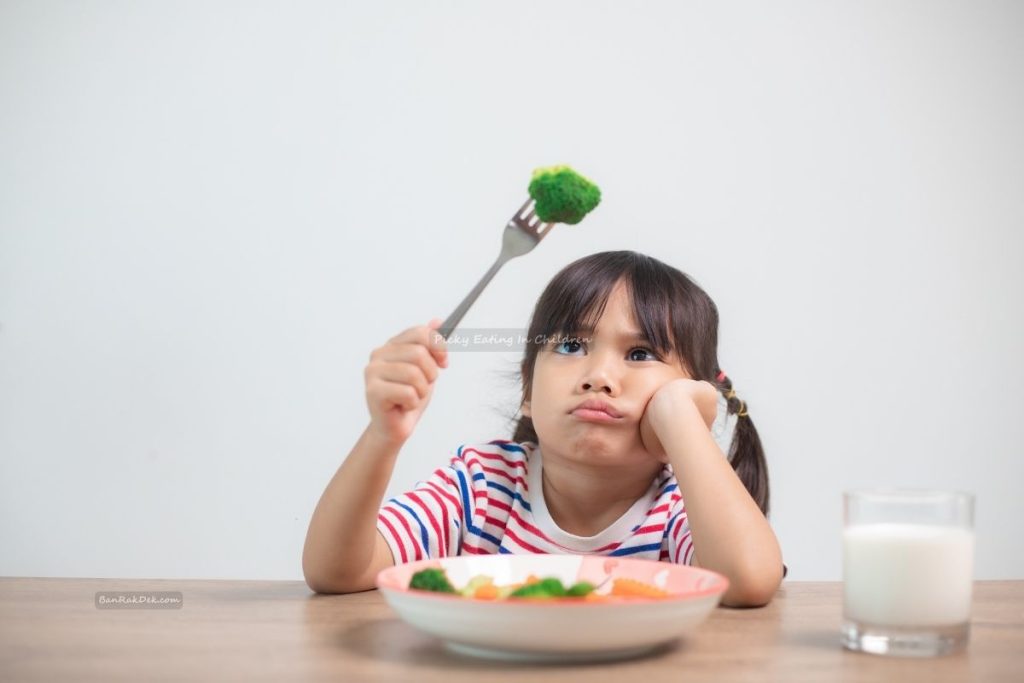
Appetite also changes after infancy. A toddler may grow more slowly than a baby and may not appear equally hungry every day.
Other possible reasons include:
- Fear of unfamiliar food
- Strong food smells
- Texture sensitivity
- Teething
- Tiredness
- Illness
- Constipation
- Too many snacks
- Large portions
- Pressure from adults
- Uncomfortable seating
- Distractions
- Changes in routine
- Previous unpleasant eating experiences
Understanding the likely cause can help parents choose a more useful response.
Look At Eating Across Several Days
Children may eat very different amounts from one meal to another.
A child might eat a large breakfast, very little lunch, and a normal dinner. The pattern may change again the next day.
When assessing picky eating in children, consider:
- The range of foods eaten over several days
- The child’s energy and activity
- Growth and development
- Drinking habits
- Bowel movements
- Whether several food groups are represented
- Whether the list of accepted foods is stable
- Whether the accepted-food list is shrinking
A young child does not need to eat a perfectly balanced plate at every meal. The overall pattern matters more.
Respect Hunger And Fullness
Children communicate hunger and fullness through words, movements, facial expressions, and behaviour.
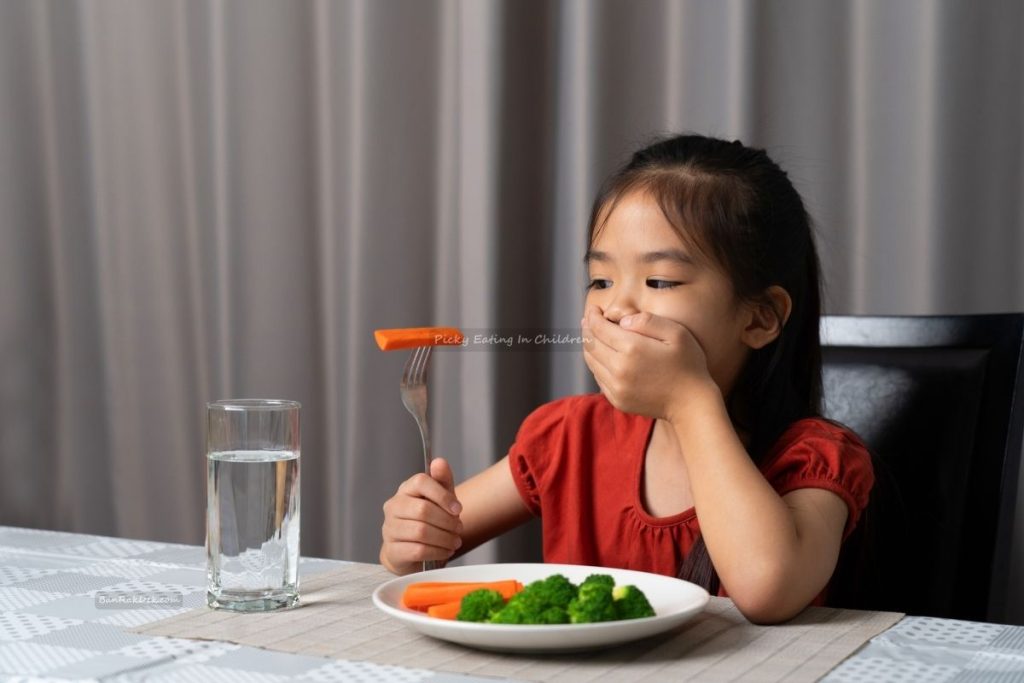
A child who is full may:
- Turn away
- Close the mouth
- Push the plate away
- Slow down
- Lose interest
- Say they are finished
- Begin playing with the food
Parents decide what food is offered, when it is served, and where the meal takes place. The child can decide whether to eat and how much.
Respecting these signals can reduce conflict around picky eating in children.
Avoid The Clean-Plate Rule
Requiring children to finish everything may make meals feel like a test.
It can also teach them to focus on adult approval instead of their own hunger and fullness.
Parents can use calm phrases such as:
- “You can decide when you are finished.”
- “You may have more if you are still hungry.”
- “You do not have to eat everything.”
- “The food can stay on your plate.”
This does not mean immediately offering unlimited snacks after every refused meal. It means keeping a predictable routine without forcing the child to eat.
Keep Meals And Snacks Predictable
Regular meals and planned snacks can help a child arrive at the table ready to eat.
A simple daily pattern may include:
- Breakfast
- Morning snack
- Lunch
- Afternoon snack
- Dinner
Continuous grazing can reduce appetite at mealtimes. Large drinks, milk, juice, or frequent snacks shortly before dinner may also affect hunger.
A predictable schedule is one of the most useful ways to manage picky eating in children without creating pressure.
Create A Calm Mealtime Routine
A familiar routine can help children understand what happens at mealtime.
A simple routine may include:
- Washing hands
- Sitting in the same place
- Using comfortable child-sized seating
- Turning off screens
- Putting toys away
- Serving food without a long delay
- Eating together when possible
- Ending the meal calmly
The routine should feel dependable rather than strict.
Check The Child’s Seating
A child may struggle to eat when the chair is uncomfortable or the feet are unsupported.
Good seating should allow the child to:
- Sit securely
- Reach the table
- Keep the body stable
- Use both hands
- Avoid sliding down
- Rest the feet when possible
Comfortable positioning can support chewing, utensil use, and attention.
Begin With Small Portions
Large portions may feel overwhelming.
Start with small amounts such as:
- One or two vegetable pieces
- A small spoonful of rice
- A few pasta shapes
- A small piece of chicken
- One slice of fruit
The child can ask for more.
Small portions make repeated exposure easier and reduce waste during periods of picky eating in children.
Include One Familiar Food
When serving something unfamiliar, include at least one food the child generally accepts.
Examples include:
- Familiar rice with a new vegetable
- Accepted bread beside a new filling
- Favourite noodles with sauce on the side
- Familiar fruit with a new yogurt
- Accepted chicken with a different side dish
The familiar item gives the child something dependable while still allowing new food to appear.
Avoid Preparing Several Replacement Meals
Parents may worry that a child will go hungry and begin preparing one replacement after another.
A more sustainable approach is to:
- Serve the planned family meal
- Include one familiar food
- Allow the child to choose what to eat
- Keep the next snack or meal predictable
- Avoid arguments
- Avoid immediately replacing dinner with a favourite snack
This approach is suitable for typical picky eating in children. Children with allergies, medical conditions, or specialist feeding plans may need different support.
Offer New Foods Repeatedly
A child may need many opportunities to become comfortable with a food.
Exposure can involve:
- Seeing it
- Helping wash it
- Touching it
- Smelling it
- Moving it around the plate
- Licking it
- Taking a small bite
- Eating more on another occasion
One refusal does not mean the food should disappear forever.
Repeated, pressure-free exposure is central to managing picky eating in children.
Space Out Repeated Offers
Offering the same rejected food at every meal can become frustrating.
Instead:
- Wait several days
- Change how the food is cut
- Serve it with something familiar
- Try it at another meal
- Offer a very small amount
- Prepare it using another texture
- Let the child see another person eating it
The goal is familiarity rather than immediate acceptance.
Do Not Force A Taste
Pressure can sound obvious or gentle.
Examples include:
- “Just one bite.”
- “You cannot leave until you eat it.”
- “Your friend eats this.”
- “You will make me happy if you try.”
- “No dessert until you finish.”
Even mild pressure may increase resistance.
Use invitations instead:
- “You may try it when you are ready.”
- “Would you like it on your plate or beside your plate?”
- “You can smell it first.”
- “You do not have to eat it.”
Reducing pressure often makes picky eating in children easier for the whole family.
Avoid Using Dessert As A Reward
Using dessert as a prize can make sweet food appear more valuable and the main meal feel like a task.
Instead of requiring vegetables before dessert, parents can decide when dessert is part of the meal and serve a suitable portion without making the child earn it.
Food should not become a reward, punishment, or bargaining tool.
Avoid Calling The Child Picky
Repeatedly describing a child as “the picky eater” may make a temporary behaviour feel like part of the child’s identity.
Use neutral language instead:
- “She is learning about this food.”
- “He prefers familiar textures today.”
- “This food is still new.”
- “She is not ready to taste it yet.”
Children hear adult conversations about their eating, so language matters.
Model Eating Calmly
Children learn by watching other people.
Parents can:
- Eat a range of foods
- Sit with the child
- Show normal enjoyment
- Avoid exaggerated praise
- Describe flavour and texture calmly
- Avoid staring at the child’s plate
The aim is to make varied eating look ordinary rather than performative.
Family modelling can gradually support progress with picky eating in children.
Eat Together When Possible
Shared meals allow children to observe how others eat, use utensils, and respond to different foods.
Family meals also make it easier for adults to focus on conversation rather than monitoring every bite.
A full family dinner is not always possible. Even one adult sitting and eating with the child can make the meal feel more social.
Let Children Help Prepare Food
Participation creates familiarity without requiring the child to eat.
Young children can help:
- Wash vegetables
- Tear soft leaves
- Stir ingredients
- Carry napkins
- Choose between two fruits
- Place food in bowls
- Put safe ingredients on a tray
The child does not need to taste the finished dish for the activity to be valuable.
Food preparation can reduce some of the uncertainty connected to picky eating in children.
Offer Limited Choices
Too many choices can overwhelm a young child.
Offer two acceptable options:
- “Would you like banana or mango?”
- “Would you like rice or noodles?”
- “Do you want the sauce beside the food?”
- “Would you like cucumber circles or sticks?”
Both choices should work for the parent.
This supports independence without asking the child to control the entire menu.
Consider Texture Preferences
Some children reject food because of texture rather than flavour.
A child may accept:
- Raw carrot but not cooked carrot
- Smooth yogurt but not yogurt with fruit pieces
- Toast but not soft bread
- Plain rice but not rice mixed with sauce
- Crisp vegetables but not soft vegetables
Observe preferences involving:
- Crunchiness
- Softness
- Temperature
- Mixed textures
- Moisture
- Lumps
- Chewiness
- Foods touching
Texture awareness is important when responding to picky eating in children.
Serve Mixed Foods Carefully
Mixed dishes can be difficult because the child cannot clearly identify each ingredient.
When serving soup, curry, fried rice, pasta sauce, or stew, consider separating a few parts.
For example:
- Plain rice beside curry
- Noodles with sauce in a small bowl
- Chicken separated from vegetables
- Bread beside soup
- Fruit beside yogurt
The goal is not to keep every food separate forever. It is to create a manageable step toward more complex meals.
Do Not Hide Every New Ingredient
Blending vegetables into a sauce can add variety, but hiding every unfamiliar ingredient may not help the child learn what foods look and taste like.
A balanced approach is to:
- Include vegetables in mixed meals
- Also offer visible vegetables
- Explain ingredients honestly
- Avoid claiming nothing is different when it is
Trust is important during picky eating in children.
Introduce Variety Gradually
A child does not need to move directly from plain pasta to a strongly flavoured mixed dish.
Small changes may include:
- A different pasta shape
- A slightly different bread
- One new fruit beside a familiar fruit
- Plain chicken with a mild dip
- Familiar yogurt in a different bowl
- Rice with sauce served separately
Gradual changes can feel safer than a completely unfamiliar meal.
Look At The Whole Diet
Parents may focus mainly on vegetables, but a balanced eating pattern includes several food groups.
Offer age-appropriate choices from:
- Fruit
- Vegetables
- Grains and starchy foods
- Protein foods
- Dairy or suitable alternatives
- Healthy fats
A child who refuses one food may still receive useful nutrients from other accepted foods while exposure continues.
Include Protein And Iron Sources
Depending on the family diet, suitable options may include:
- Chicken
- Meat
- Fish
- Eggs
- Beans
- Lentils
- Tofu
- Iron-fortified cereal
A child who avoids nearly all protein or iron-rich foods may need professional nutritional advice.
Do not begin supplements without appropriate guidance.
Watch Excessive Milk Intake
Milk can provide useful nutrition, but drinking large amounts may reduce interest in solid food.
Consider whether the child:
- Drinks milk immediately before meals
- Uses milk to replace most meals
- Requests bottles frequently
- Refuses protein-rich foods
- Becomes constipated
- Shows little interest in chewing
A milk-heavy diet can complicate picky eating in children, so concerns should be discussed with a healthcare professional.
Use Snacks Wisely
Snacks can support nutrition when meals are small.
Useful combinations may include:
- Fruit and yogurt
- Bread and cheese
- Crackers and hummus
- Egg and toast
- Banana with a suitable spread
- Vegetables with dip
Snacks should not become a constant supply of favourite foods throughout the day.
Keep Drinks Simple
Water and age-appropriate milk are generally more useful everyday options than frequent sweet drinks.
Sweet drinks may reduce appetite and make plain water less appealing.
Large drinks immediately before a meal may also leave less room for food.
Keep Mealtimes Reasonably Short
A meal that lasts a very long time can become tiring.
When the child is clearly finished:
- Remove the plate calmly
- Avoid criticism
- Clean up
- Continue the normal routine
- Wait until the next planned meal or snack
There is no need to keep a child at the table indefinitely because of picky eating in children.
Respond Calmly To Food Throwing
Food throwing may mean:
- The child is finished
- The portion is too large
- The child is experimenting
- The meal has continued too long
- The child wants attention
- The child is frustrated
Use a simple boundary:
“Food stays on the table. It looks like you are finished.”
Avoid turning the incident into a long argument.
Work With Nursery Caregivers
Children may eat differently at nursery because:
- Other children are eating
- Meals follow a consistent routine
- Portions are smaller
- The presentation is different
- Adults respond differently
- The child is more active
Ask caregivers:
- Which foods the child accepts
- How much the child usually eats
- Which textures work well
- Whether refusal causes distress
- How snacks are scheduled
- Whether chewing appears difficult
Nursery information can help parents understand picky eating in children more accurately.
Avoid Negative Comparisons
Avoid saying:
“You eat this at nursery, so why will you not eat it at home?”
Instead, say:
“You tried cucumber with your friends. We can put a little cucumber here too.”
The tone should remain curious and supportive.
Recognise Sensory Preferences
Some children respond strongly to:
- Smell
- Texture
- Temperature
- Colour
- Sound
- Mixed foods
- Sticky hands
- Food around the mouth
Parents can help by:
- Providing a napkin
- Allowing utensils
- Serving sauce separately
- Introducing changes slowly
- Avoiding sudden mixing
- Keeping the environment calm
Sensory preferences do not automatically mean a child has a disorder, but severe restrictions may require professional support.
When Picky Eating May Need Extra Help
Typical picky eating in children usually involves preferences while the child continues eating a reasonable range and growing normally.
More concerning signs may include:
- Very few accepted foods
- A food list that continues shrinking
- Refusal of an entire food group
- Strong distress around unfamiliar food
- Gagging or vomiting with many textures
- Difficulty chewing
- Coughing or choking during meals
- Food remaining in the mouth
- Extremely long meals
- Poor growth
- Weight loss
- Nutritional deficiency
- Pain while eating
- Extreme fear of food
- Dependence on liquids beyond what is expected
These signs deserve professional assessment.
When To Contact A Healthcare Professional
Seek advice when:
- The child loses weight
- Growth is a concern
- The child appears unusually tired
- There are signs of dehydration
- Meals involve coughing or choking
- Eating causes pain
- Vomiting is frequent
- Constipation is persistent
- The diet is extremely limited
- Allergies are suspected
- The family cannot manage the situation safely
Parents do not need to wait until picky eating in children becomes severe before requesting support.
Keep A Short Food Record
A short food record may help identify patterns.
For several days, note:
- Meals and snacks offered
- Foods eaten
- Drinks
- Time of day
- Texture
- Mealtime behaviour
- Bowel habits
- Symptoms
- Nursery intake
The purpose is to create a useful overview, not to increase anxiety by recording every bite.
Avoid Unnecessary Supplements
Parents may feel tempted to buy supplements when a child eats selectively.
Supplements may be appropriate in some situations, but professional advice should guide the choice and amount.
The correct product depends on:
- Age
- Diet
- Medical history
- Confirmed deficiency
- Other supplements
- Allergies
Keep all vitamins and supplements out of children’s reach.
Recognise Small Progress
Progress with picky eating in children may include:
- Sitting at the table calmly
- Allowing a new food on the plate
- Touching a new texture
- Smelling the food
- Licking it
- Taking a small taste
- Eating it on another day
Acknowledge progress calmly without turning every bite into a major performance.
Common Parent Mistakes
Serving Portions That Are Too Large
Large servings can make unfamiliar food feel overwhelming.
Pressuring The Child
Pressure may increase resistance and anxiety.
Offering Snacks Continuously
Constant grazing may reduce hunger at meals.
Preparing Several Replacement Dinners
This can make family meals difficult to sustain.
Removing Rejected Foods Permanently
Children may need repeated opportunities.
Comparing Children
Siblings and friends have different preferences and development.
Hiding Every Ingredient
Children also need to see and recognise food.
Using Dessert As A Reward
This may make dessert appear more valuable than the meal.
Ignoring Chewing Or Swallowing Problems
These concerns need professional assessment rather than ordinary strategies for picky eating in children.
A Simple Mealtime Formula
A practical meal can include:
One familiar food: Something the child usually accepts
One family food: A suitable part of the shared meal
One learning food: A small amount of something less familiar
One simple drink: Usually water or another age-appropriate option
One calm response: No forcing, bargaining, or criticism
This structure creates repeated opportunities without expecting every item to be eaten.
👉 “Parents managing picky eating may also find these helpful hydration tips for children useful for supporting healthy everyday habits.”
Conclusion
Picky eating in children is often a normal part of toddler and preschool development. Young children may refuse unfamiliar food, change preferences suddenly, prefer specific textures, or eat very different amounts from one day to another.
Parents can support healthy eating by providing regular meals and planned snacks, serving small portions, including at least one familiar food, and respecting hunger and fullness signals.
Repeated exposure is essential. A child may need to see, touch, smell, or taste a food many times before accepting it. Continue offering small amounts without making tasting compulsory.
Pressure, criticism, bargaining, and clean-plate rules can make picky eating in children more stressful. Calm invitations generally work better than demands.
Family meals, adult modelling, food preparation, and limited choices can help children become more comfortable with a wider variety of food.
Texture should also be considered. Some children prefer food that is crisp, smooth, dry, separate, or predictable. Introduce texture changes gradually.
Work with nursery caregivers to understand what the child eats in another environment. Share clear information about allergies, medical needs, chewing difficulties, and swallowing concerns.
Most ordinary picky eating in children can be managed patiently at home. Seek professional advice when the diet becomes extremely restricted, accepted foods continue disappearing, growth is affected, eating causes pain or distress, or there are problems with chewing, coughing, choking, or swallowing.
The goal is not to make a child eat every food. The goal is to create a calm and safe environment where eating skills, confidence, and familiarity can develop gradually.
FAQ
Is Picky Eating In Children Normal?
Yes. Food refusal and changing preferences are common during the toddler and preschool years.
Should I Make My Child Take One Bite?
It is usually better to invite rather than force. The child may begin by looking at, touching, smelling, or licking the food.
How Often Should I Offer A Rejected Food?
Continue offering small amounts on different occasions without pressure. Some children need many exposures before accepting a food.
Should I Cook A Different Meal When My Child Refuses Dinner?
Usually, serve the planned family meal with at least one familiar food. Avoid preparing several replacements unless the child has specific medical or feeding needs.
How Large Should A Toddler Portion Be?
Begin with a small portion and allow the child to ask for more.
Can Too Many Snacks Affect Picky Eating In Children?
Yes. Frequent grazing may reduce hunger at meals. Use planned snacks and avoid filling the child with food or large drinks shortly before meals.
Should I Hide Vegetables In Other Foods?
Vegetables can be included in mixed meals, but children should also have opportunities to see and become familiar with them.
Why Does My Child Eat At Nursery But Not At Home?
The nursery routine, peer modelling, portions, food presentation, and adult responses may differ from home.
When Should Parents Worry?
Seek advice when growth is affected, the diet is extremely limited, eating causes pain or strong distress, or the child has difficulty chewing or swallowing.
Who Can Help With Picky Eating In Children?
Depending on the concern, support may come from a paediatrician, family doctor, dietitian, occupational therapist, speech and language therapist, or specialist feeding team.