
- Introduction
- The Science Behind How Social Play Boosts Emotional Intelligence in Kids
- Types of Social Play That Boost Emotional Intelligence in Kids
- How Social Play Boosts Emotional Intelligence in Kids in Everyday Life
- Practical Ways to Encourage Social Play for Emotional Growth
- The Long-Term Benefits of Social Play on Emotional Intelligence
- Final Thoughts: Why Social Play is Crucial for Emotional Intelligence
- FAQ Section
- What is emotional intelligence, and why is it important for kids?
- How does social play help children develop empathy?
- Can social play improve communication skills in children?
- How does social play promote emotional regulation?
- Are there long-term benefits of social play for emotional intelligence?
- How does social play compare to screen time in developing emotional intelligence?
- What role do parents play in fostering social play?
Introduction
Children learn best through play. But beyond just fun and games, social play plays a vital role in shaping a child’s emotional intelligence. Social play boosts emotional intelligence in kids by teaching them crucial life skills such as empathy, emotional regulation, conflict resolution, and cooperation.
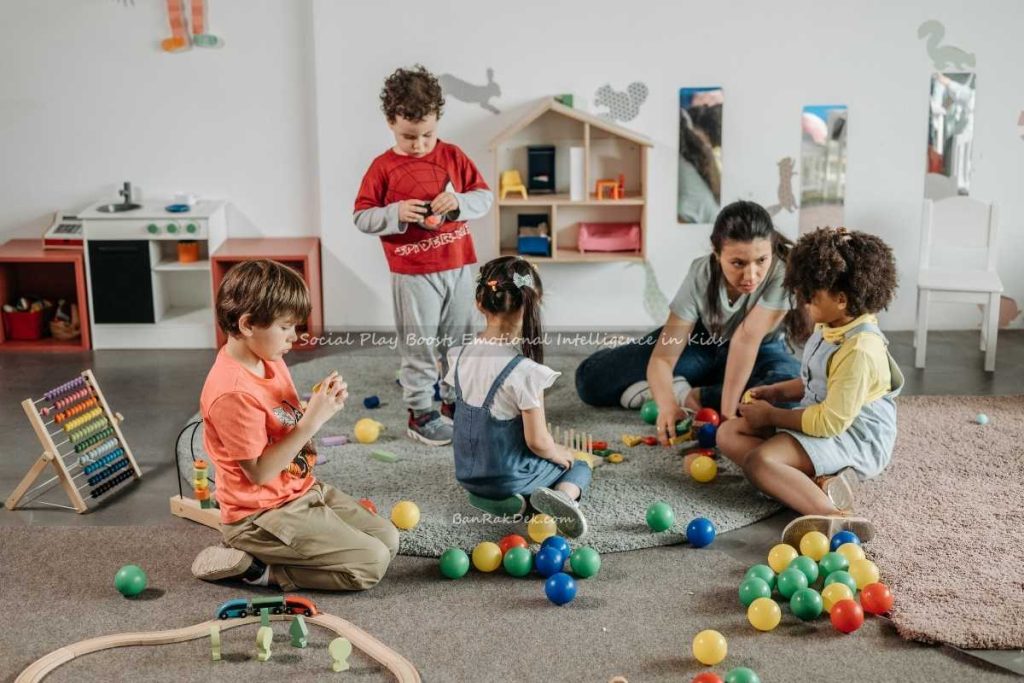
From playground interactions to board games and imaginative role-play, social play serves as a natural classroom where children develop their ability to understand and manage emotions—both their own and those of others. In today’s digital age, ensuring that children engage in rich, meaningful social play is more critical than ever.
In this article, we’ll explore how social play boosts emotional intelligence in kids, the psychological principles behind it, and practical ways to encourage play-based learning for emotional growth.
The Science Behind How Social Play Boosts Emotional Intelligence in Kids
Research has consistently shown that social play boosts emotional intelligence in kids by engaging their cognitive and emotional faculties. Emotional intelligence (EQ) refers to the ability to recognize, understand, and manage emotions effectively. It consists of five core components:
Self-awareness – Recognizing one’s emotions.
Self-regulation – Managing emotions appropriately.
Motivation – Using emotions to achieve goals.
Empathy – Understanding and considering others’ feelings.
Social skills – Navigating interpersonal relationships.
Social play naturally incorporates all these elements. When children play together, they experience joy, frustration, cooperation, and competition—each providing an opportunity to learn about emotions and relationships.
Types of Social Play That Boost Emotional Intelligence in Kids
Cooperative Play
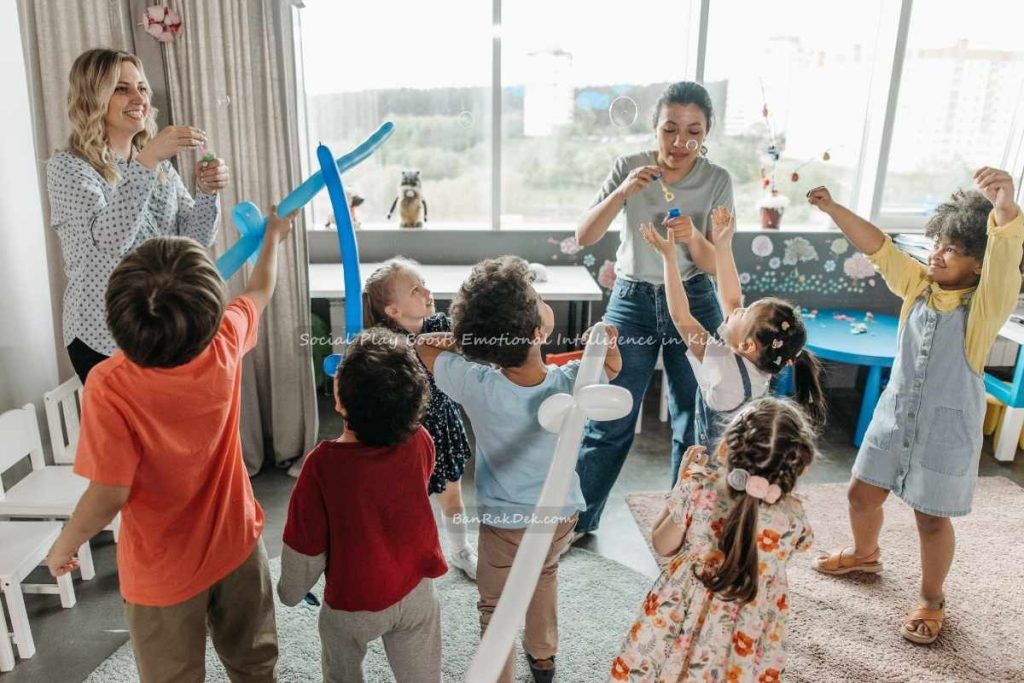
Cooperative play, such as team sports, group projects, or collaborative storytelling, teaches children how to work together. Through these activities, kids develop patience, teamwork, and problem-solving skills. When disagreements arise, they learn to negotiate, compromise, and express themselves constructively.
Imaginative Role-Playing
Pretend play, like playing “house,” “doctor,” or “superheroes,” encourages kids to step into different roles and perspectives. This helps them practice empathy by imagining how others feel in different situations. Role-playing also allows children to experiment with emotional expression in a safe and controlled environment.
Competitive Play
Games with rules, such as board games, card games, and sports, teach children about fair play, winning and losing gracefully, and handling frustration. These experiences contribute to emotional resilience and self-regulation, two essential aspects of emotional intelligence.
Free Play and Unstructured Social Play
Unstructured play, like playground activities and spontaneous make-believe scenarios, helps kids develop creativity and emotional expression. Because there are no strict rules or goals, children have to navigate social interactions on their own, developing independence and social awareness.
How Social Play Boosts Emotional Intelligence in Kids in Everyday Life
Enhancing Self-Awareness
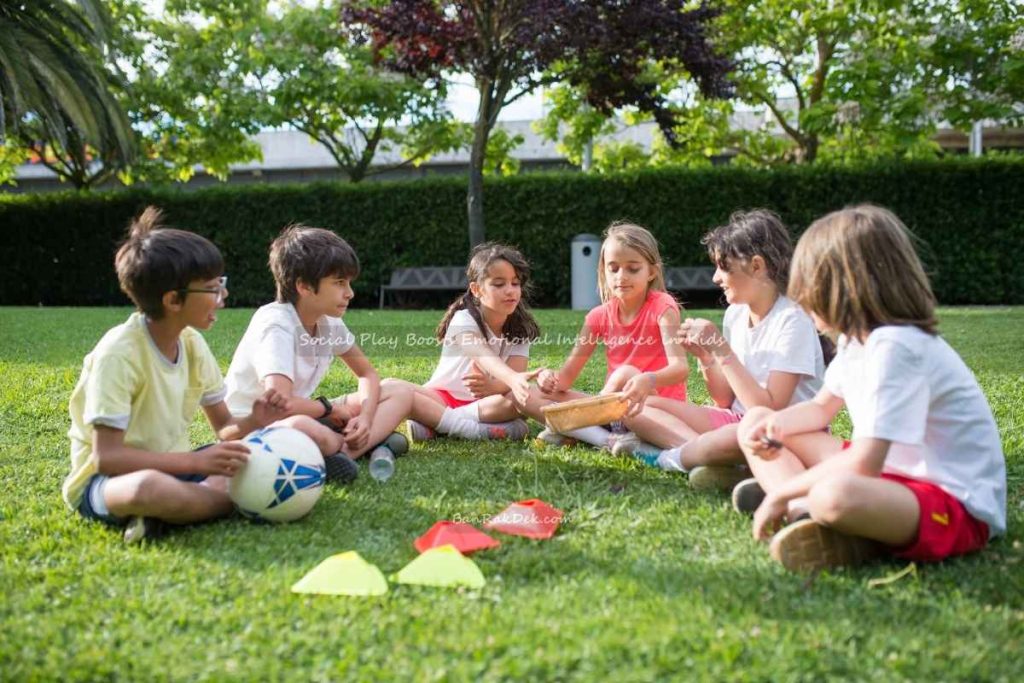
When children play with others, they encounter different emotions—excitement, disappointment, frustration, and joy. Through these interactions, they become more attuned to their own feelings and learn to identify them accurately.
Developing Emotional Regulation
Imagine a child losing a board game. Their immediate reaction might be frustration or anger. However, through repeated play experiences, they gradually learn to manage these emotions, accept losses gracefully, and move on. Social play boosts emotional intelligence in kids by providing repeated opportunities to practice emotional control.
Building Empathy
Social play helps kids step into another person’s shoes. When a child comforts a friend who has fallen or shares a toy to make another child happy, they are learning the core principles of empathy. Studies show that children who engage in regular social play are more likely to develop strong empathetic skills, which are crucial for forming meaningful relationships later in life.
Improving Social Skills
Effective communication, cooperation, and problem-solving are all byproducts of social play. Whether negotiating rules in a game or resolving a disagreement with a friend, kids refine their social skills through interactive play.
Practical Ways to Encourage Social Play for Emotional Growth
Organize Playdates and Group Activities
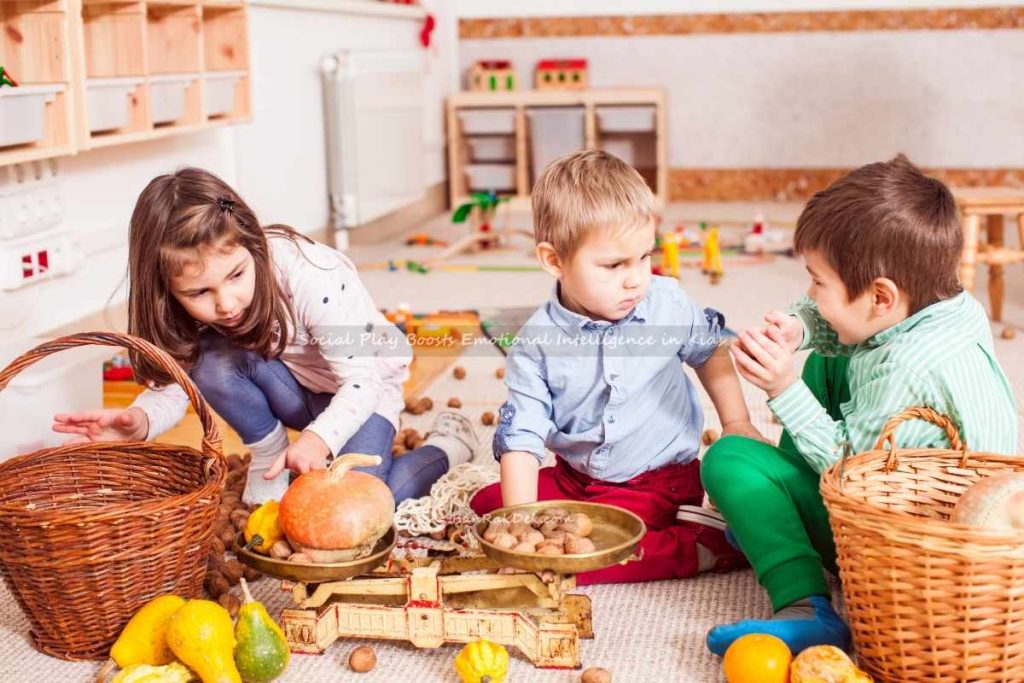
Regular playdates with peers help kids practice social skills in a comfortable environment. Encourage activities that require teamwork, such as building a puzzle together or playing cooperative board games.
Encourage Outdoor Play
Outdoor play in parks, playgrounds, or nature settings allows children to interact freely. Running, climbing, and playing tag encourage both physical and emotional development.
Provide Open-Ended Toys
Toys like dolls, action figures, building blocks, and art supplies foster imaginative play, encouraging children to express emotions and engage in collaborative storytelling.
Limit Screen Time
Excessive screen time reduces opportunities for face-to-face interactions. Encourage kids to engage in hands-on, social activities instead.
Model Emotional Intelligence
Children learn by observing adults. Demonstrate healthy emotional regulation, active listening, and empathy in your own interactions.
Encourage Team Sports and Group Games
Enroll kids in team-based activities like soccer, basketball, or drama clubs. These experiences promote teamwork, patience, and leadership skills.
Create a Playful Home Environment
Make play a part of daily life by incorporating family game nights, storytelling sessions, and pretend play activities at home.
The Long-Term Benefits of Social Play on Emotional Intelligence

Better Academic Performance
Emotionally intelligent children tend to perform better academically because they can manage stress, focus on tasks, and work well with teachers and classmates.
Stronger Friendships and Relationships
Kids who engage in regular social play develop better communication and interpersonal skills, helping them build and maintain meaningful friendships.
Improved Mental Health
Children who can regulate their emotions are less likely to experience anxiety, depression, or social withdrawal.
Successful Careers in Adulthood
Emotional intelligence is a key predictor of career success. Children who learn social-emotional skills through play grow into adults who excel in teamwork, leadership, and problem-solving.
Final Thoughts: Why Social Play is Crucial for Emotional Intelligence
In a world that increasingly emphasizes academic achievement and digital interaction, the importance of social play should not be overlooked. Social play boosts emotional intelligence in kids by nurturing essential life skills such as empathy, self-awareness, and resilience.
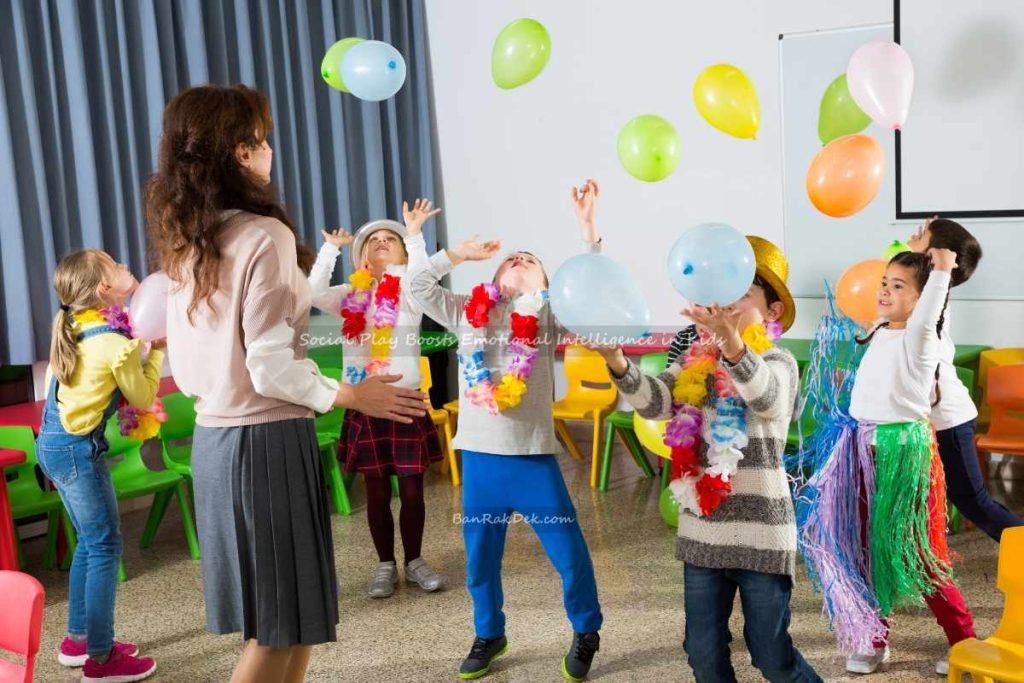
By creating environments that encourage meaningful social play, we give children the tools they need to thrive emotionally, socially, and academically. Whether through cooperative games, role-playing, or outdoor adventures, every interaction becomes an opportunity for emotional growth.
Encourage play. Foster emotional intelligence. Watch your child grow into a confident, compassionate individual ready to navigate the complexities of the world.
FAQ Section
What is emotional intelligence, and why is it important for kids?
Emotional intelligence (EI) refers to the ability to recognize, understand, manage, and express emotions effectively. It’s crucial for kids because it helps them build strong relationships, handle stress, and succeed academically and socially. Social play boosts emotional intelligence in kids by providing opportunities to practice empathy, communication, and self-regulation.
How does social play help children develop empathy?
Social play encourages children to take on different roles and perspectives, such as during pretend play. This helps them understand how others feel and fosters empathy. Research shows that kids who engage in regular social play are more likely to exhibit prosocial behaviors like sharing and helping others.
Can social play improve communication skills in children?
Absolutely! Social play provides kids with opportunities to practice verbal and non-verbal communication. Whether they’re negotiating rules or resolving conflicts, children learn to express themselves clearly and listen to others, which are essential components of emotional intelligence.
How does social play promote emotional regulation?
During social play, children experience a range of emotions, from joy to frustration. These experiences help them practice coping strategies, such as deep breathing or positive self-talk, which are key to emotional regulation. Over time, kids become more aware of their emotions and better equipped to manage them.
What are some practical ways to encourage social play?
Parents and caregivers can encourage social play by organizing playdates, enrolling kids in group activities like sports or dance, limiting screen time, and providing open-ended toys like blocks and dolls. Modeling emotional intelligence in your own interactions also sets a powerful example.
Are there long-term benefits of social play for emotional intelligence?
Yes, the benefits of social play extend far beyond childhood. Kids who develop emotional intelligence through play are more likely to succeed academically, build healthy relationships, and thrive in their careers. They’re also better equipped to handle life’s challenges.
How does social play compare to screen time in developing emotional intelligence?
While screens can offer educational content, they often lack the face-to-face interactions that are crucial for developing emotional intelligence. Social play provides real-world opportunities for kids to practice empathy, communication, and emotional regulation, making it far more effective for emotional growth.
What role do parents play in fostering social play?
Parents play a critical role by creating environments that encourage social play. This includes setting up playdates, providing toys that promote interaction, and modeling emotional intelligence in their own behavior. By prioritizing social play, parents can help their kids build essential emotional skills.