- Introduction: Why “Natural” Matters for Families Today
- Understanding the Child Immune System (In Simple Terms)
- Core Lifestyle Habits That Strengthen Immunity
- Immune Boosting Foods for Kids Naturally (Grocery-List + Mini Recipes)
- Supplements & Herbal Support: When Food Isn’t Quite Enough
- Hygiene & Prevention (Small Habits, Big Payoffs)
- Seasonal & Cultural Perspectives (Make Wellness Feel “At Home”)
- Natural Immune Boosting Tips for Children (Quick-Start Checklist)
- Putting It All Together (A One-Week Starter Plan)
- Conclusion: Small Daily Choices, Big Long-Term Wins
- FAQs (Parent-Approved, Science-Aware)
Introduction: Why “Natural” Matters for Families Today
Between school germs, busy schedules, screens, and snack temptations, parents often ask how to boost child immune system naturally without turning the home into a clinic. The good news: everyday habits—sleep, movement, sunlight, whole foods, and handwashing—work together to fortify the body’s defenses. In this article you’ll learn practical routines you can start today, a grocery list of immune boosting foods for kids naturally, and simple cultural touches (including Thai-inspired options) that make healthy living easier—and tasty. By the end, you’ll have clear, realistic steps for building an environment where your child’s immunity can thrive.
Understanding the Child Immune System (In Simple Terms)
Children’s immune systems are dynamic—learning to recognize germs, building memory, and becoming more efficient over time. That learning curve is why kids catch more colds in early school years and then gradually toughen up. Genetics plays a role, but daily lifestyle gives the immune system “training reps.”
Key ideas parents find helpful:
- Innate defenses (skin, mucus, stomach acid) are the first barrier; teach kids to protect them with gentle hygiene, sleep, and nutrition.
- Adaptive defenses (B and T cells) learn from exposure and vaccines, which “rehearse” responses before real threats arrive. Staying current on recommended vaccines remains a cornerstone of prevention; vaccines prime defenses before infections take hold. ([Harvard Health][1])
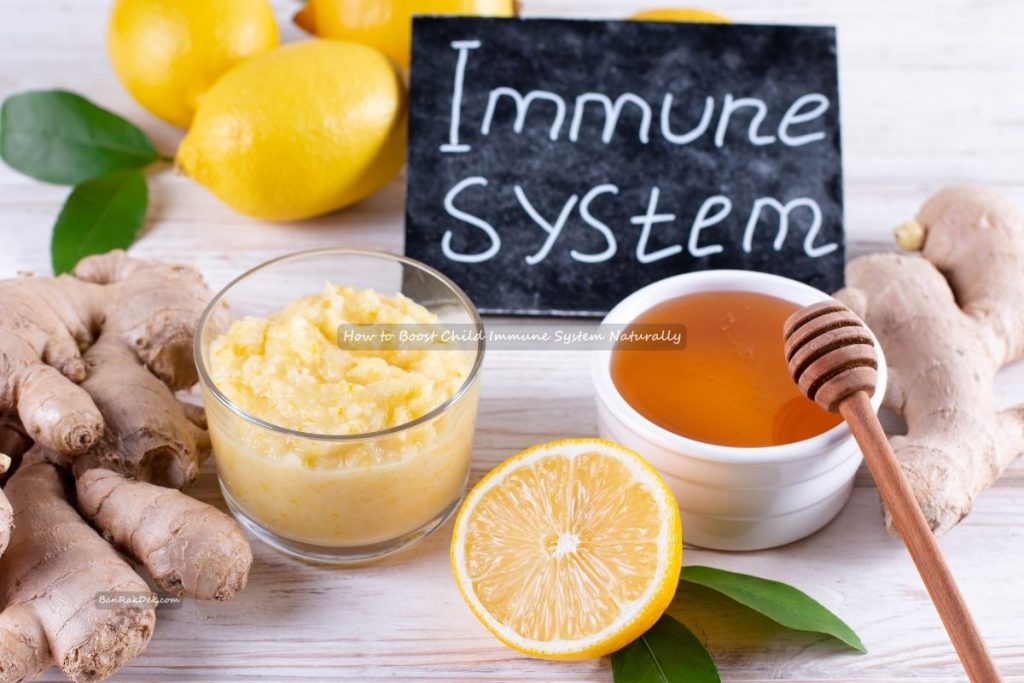
If you’re wondering how to boost child immune system naturally, remember that small, repeatable habits—not extreme measures—build the sturdiest foundation.
Core Lifestyle Habits That Strengthen Immunity
1) Balanced Nutrition That Kids Actually Eat
Food is information for the immune system. Aim for color and variety: fruits, vegetables, whole grains, legumes, nuts/seeds (as age-appropriate), eggs, fish, and fermented foods. Antioxidants (berries, leafy greens), zinc (beans, meat, seeds), and vitamin C (citrus, guava, papaya) support normal immune function. Family-friendly fermented options like yogurt or kefir add probiotics that support gut health—an important immune hub. ([Cleveland Clinic][2])
👉 “Looking to make mealtimes healthier and stress-free? Don’t miss our guide on How to build healthy eating habits in young kids.”
To work your immune boosting foods for kids naturally into routine:
- Make a “rainbow” plate challenge a few nights per week.
- Stir plain yogurt with mango, banana, or dragon fruit for a probiotic dessert.
- Try herbs/spices like turmeric and ginger in soups or mild stir-fries.
Thai-friendly ideas: jasmine or brown rice with garlicky greens; pumpkin soup with coconut milk; papaya salad prepared mild; grilled fish with lime; fruit plate (mango, guava, pineapple) for vitamin C.
2) Adequate Sleep (The Body’s Nightly Repair Window)
Sleep regulates immune signaling—shortchanging it can increase sick days. Broad consensus recommendations for total 24-hour sleep (including naps) are:
- 4–12 months: 12–16 hours
- 1–2 years: 11–14 hours
- 3–5 years: 10–13 hours
- 6–12 years: 9–12 hours
- 13–18 years: 8–10 hours
These ranges are endorsed by pediatric sleep experts and the AAP. ([Pediatrics Publications][3])

Bedtime routines help: dim lights after dinner, screens off 60–90 minutes before bed, and calming rituals (bath, story, light stretching). If you’re mapping how to boost child immune system naturally, guard sleep like a sacred appointment.
👉 “how to build healthy eating habits in young kids The Importance of Sleep for Kids.”
3) Daily Movement and Outdoor Play
For school-age kids, the World Health Organization recommends at least 60 minutes of moderate-to-vigorous activity daily, with muscle- and bone-strengthening activities 3+ days/week. Movement supports circulation and immune surveillance—and outdoor play adds sunlight exposure for vitamin D. ([World Health Organization][4])
Family-friendly ideas:
- Walk or cycle to school if safe.
- After-school “movement snack”: 15–20 minutes of tag, jump rope, or ball games.
- Weekend nature walks—let kids set the pace.
4) Stress Management for Small Humans
Stress hormones (like cortisol) can dampen immune responses. Children need decompression: unstructured play, family connection, storytelling, drawing, music, or short guided breathing. Name feelings; normalize them. A calmer home rhythm helps how to boost child immune system naturally feel doable.
Immune Boosting Foods for Kids Naturally (Grocery-List + Mini Recipes)
Center this section around the table—simple, tasty, and repeatable.
Fruits & Veggies (daily):
Berries, citrus (lime, orange), guava, papaya, mango, pineapple, tomatoes, carrots, pumpkin, broccoli, Chinese kale, morning glory. Add a fruit-veg pairing to lunch boxes (e.g., pineapple + cucumber sticks).
Protein & Zinc:
Eggs, tofu, lentils, chickpeas, seeds (pumpkin, sesame), lean meats, fish. Stir sesame seeds into rice; add chickpeas to soups.
Fermented & Probiotic Options:
Yogurt, kefir, probiotic drinks, naturally fermented veggies (mild). Mix yogurt with mashed banana and a sprinkle of oats; offer kefir “smoothies” with mango. Probiotics can support overall gut balance; look for child-appropriate products and discuss with your pediatrician if considering supplements. ([Cleveland Clinic][5])
Healthy Fats:
Avocado, olive oil, coconut in moderation, fatty fish (omega-3s). Try grilled salmon with lime and herbs; mashed avocado on whole-grain toast.
Hydration:
Water first. Herbal infusions for kids should be mild and age-appropriate—always check for allergies and avoid caffeine for younger children.
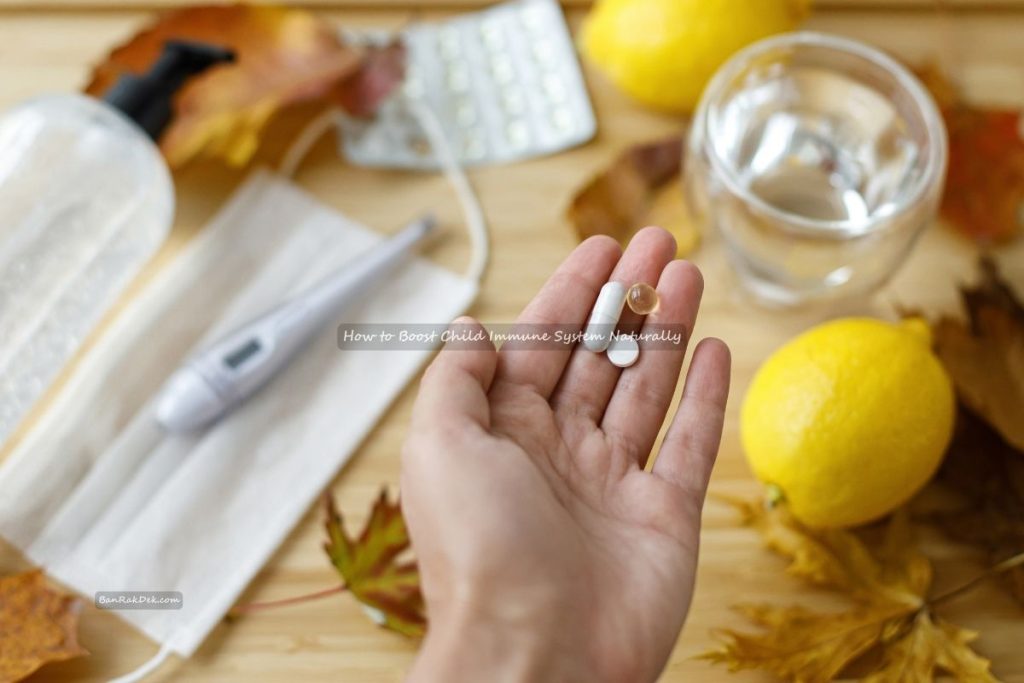
Nudge cooking with immunity-friendly flavors: turmeric, ginger, garlic. A gentle turmeric-ginger chicken rice soup is soothing during sniffle season. If you keep immune boosting foods for kids naturally on rotation, you’ll see how much easier lunches and dinners become. ([Cleveland Clinic][2])
Supplements & Herbal Support: When Food Isn’t Quite Enough
Whole foods come first, but certain nutrients deserve a mention:
- Vitamin D. Many kids don’t meet needs through diet alone. General, age-based reference intakes are commonly cited around 10 mcg (400 IU) for infants and 15 mcg (600 IU) for children/teens—with clinical nuance depending on region, sun exposure, and health status. Always confirm with your pediatrician before supplementing. ([Office of Dietary Supplements][6])
- Probiotics. May support gut balance; look for child-specific strains/doses and introduce with professional guidance if your child has medical issues. ([Cleveland Clinic][5])
- Zinc, vitamin C. Usually achievable with food variety; discuss supplements only if your clinician identifies a gap.
Avoid megadoses and “miracle” claims. The smart path for how to boost child immune system naturally is steady, safe inputs—never extreme regimens. Guidance evolves (for example, societies update vitamin D positions), so rely on your pediatrician for personalized recommendations. ([Office of Dietary Supplements][7])
Hygiene & Prevention (Small Habits, Big Payoffs)
Kids don’t need a sterile world—they need smart hygiene:
- Handwashing with soap and water is one of the most effective ways to prevent respiratory and diarrheal infections; use sanitizer (≥60% alcohol) when soap isn’t available. Teach “fronts, backs, between fingers, under nails,” about 20 seconds. ([CDC][8])
- Oral hygiene: brush twice daily; a healthy mouth reduces bacterial burden.
- Food safety: wash produce; cook meats thoroughly. ([Harvard Health][1])
- Vaccinations: staying current primes the immune system ahead of exposure and remains a cornerstone of community protection. ([Harvard Health][1])

These basics are the quiet heroes of how to boost child immune system naturally—ordinary, inexpensive, and incredibly effective.
Seasonal & Cultural Perspectives (Make Wellness Feel “At Home”)
Seasons change routines, appetites, and exposures. During flu peaks, tighten up sleep schedules, handwashing, ventilation, and lunchbox choices (more produce, soups, hydration). ([CDC][9])
Culturally mindful, kid-friendly ideas:
- Soups & broths: clear chicken soup with ginger, garlic, and carrots; pumpkin coconut soup with lime.
- Rainy-season warmers: mild turmeric rice, ginger tea (very diluted, age-appropriate), and vitamin-C fruits like guava and pineapple.
- School snacks: banana-yogurt cups, rice with sesame and egg, cucumber sticks with hummus, mixed fruit cups.
These are everyday examples of immune boosting foods for kids naturally woven into family rhythms.
Natural Immune Boosting Tips for Children (Quick-Start Checklist)
When life gets busy, come back to this simple list for how to boost child immune system naturally:
- Sleep: Hit the age-appropriate target range most nights; keep a steady bedtime. ([HealthyChildren.org][10])
- Movement: Aim for 60 minutes of active play daily; mix in bone- and muscle-strengthening activities several times per week. ([World Health Organization][4])
- Rainbow plates: Two fruit/veg colors per meal; include zinc sources (beans, lentils, seeds, fish) and fermented foods most days. ([Cleveland Clinic][2])
- Hydrate: Water first; watch sugary drinks.
- Sunlight & D (smartly): Sensible outdoor time; ask your pediatrician if vitamin D supplementation is appropriate for your child. ([Office of Dietary Supplements][6])
- Hygiene: Handwashing “20 seconds, all surfaces.” Pack a pocket sanitizer for school. ([CDC][8])
- Stress relief: Daily decompression—play, stories, music, breathing.
- Vaccines & checkups: Keep recommendations up-to-date for prevention. ([Harvard Health][1])
- Sick-day basics: Rest, fluids, easy soups, and medical care when needed.
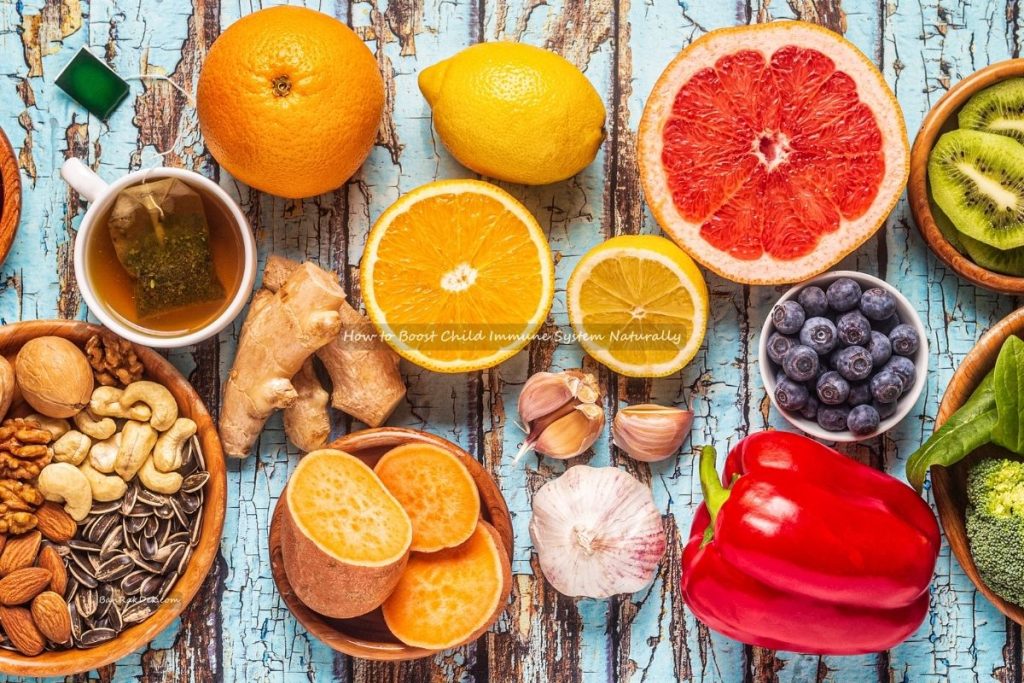
Post this on the fridge. Consistency beats perfection.
Putting It All Together (A One-Week Starter Plan)
Goal: make routines automatic so you’re not micromanaging health.
- Mornings: water first; fruit + protein (yogurt, egg, nut/seed butter as age-appropriate). 5-minute stretch or silly dance before school.
- Lunches: include at least one probiotic or fiber-rich item: yogurt cup, kefir smoothie, beans, lentils, veggie sticks, fruit.
- Afternoons: 20–30 minutes of outdoor play; leave screens for later.
- Dinners: “rainbow” + protein + whole grain; rotate fish/eggs/beans. A mild ginger-turmeric soup once or twice/week.
- Evenings: dim lights after dinner, no screens 60–90 minutes pre-bed, calming story or breathing exercise.
- Weekends: market trip for produce and fermented options; meal-prep soups, overnight oats, snack trays.
This rhythm quietly implements immune boosting foods for kids naturally and the other keystones—without adding stress.
Conclusion: Small Daily Choices, Big Long-Term Wins
You asked how to boost child immune system naturally, and the answer is both simple and powerful: protect sleep, prioritize daily movement, anchor meals in whole foods (with a rainbow on the plate and fermented options most days), practice smart hygiene, and nurture calm. These are ordinary steps that—done consistently—become extraordinary for health. Start with one or two changes this week, make them easy and flavorful, and your child’s immune system will get the steady support it needs to learn, grow, and thrive. ([Harvard Health][1])
FAQs (Parent-Approved, Science-Aware)
1) What’s the fastest way to help when everyone at school is sick?
There’s no instant shield, but doubling down on sleep, hydration, handwashing, and immune boosting foods for kids naturally (soups, yogurt, fruit, veggies) is smart. If symptoms are significant or persistent, call your pediatrician. ([CDC][8])
2) Do kids need vitamin D supplements year-round?
It depends on age, diet, sun exposure, and clinical guidance. Many families discuss vitamin D with their pediatrician—especially for low-sun seasons, indoor lifestyles, or dietary restrictions. ([Office of Dietary Supplements][6])
3) Are probiotics safe for children?
Many are, but product quality and dose matter; discuss with your clinician, particularly if your child has health issues. You can also emphasize probiotic foods like yogurt and kefir. ([Cleveland Clinic][5])
4) How much should my child exercise?
School-age children and adolescents should get at least 60 minutes of moderate-to-vigorous activity daily. More offers added benefits. ([World Health Organization][4])
5) Is there any single food that “boosts” immunity on its own?
No single food is magic. Think how to boost child immune system naturally through patterns: varied whole foods, movement, sleep, hygiene, and stress care working together. ([Harvard Health][1])