
- Introduction
- Why Small Homes Need Smarter Nursery Design
- Cribs That Truly Save Space (and Grow with Your Baby)
- Changing Table & Storage Combos That Punch Above Their Weight
- Seating That Fits: Compact Comfort for Feeding & Bonding
- Smart Storage Solutions That Keep Calm & Orderly
- Layout & Design Tips for Micro Rooms (That Still Look Beautiful)
- Budget-Friendly Picks & Where to Shop (Without Compromising Safety)
- A Room-by-Room Walkthrough (So You Can Visualize It)
- Cultural & Climate-Smart Considerations (Especially for Asian City Living)
- Put It All Together: Your 6-Step Mini Nursery Plan
- Conclusion: Small Space, Big Comfort
- FAQs
Introduction
Small homes and city apartments can be wonderfully cozy, but when a new baby arrives, every centimeter counts. If you live in a condo, studio, or narrow townhouse, the right choices can turn tight corners into calm, functional spaces. In this guide, you’ll find practical, style-forward space-saving nursery furniture for small apartments, plus small nursery furniture ideas and layout strategies that blend storage, safety, and serenity. We’ll explore mini cribs, wall-mounted changers, slim seating, and vertical storage—along with culturally mindful tips (think: materials that breathe well in humid climates, and designs that adapt to shared rooms often found in Asian city living). By the end, you’ll have a plan you can measure, shop, and assemble with confidence.
👉 “Looking to set up a safe and stylish baby room? Don’t miss our guide on The Best Nursery Furniture Essentials for New Parents.”
Why Small Homes Need Smarter Nursery Design
Tiny rooms ask more from every piece you bring in. You’re juggling sleep, feeding, diaper changes, and storage—often in multipurpose spaces like a corner of your bedroom or a studio. The goal isn’t to cram more; it’s to choose better. That starts with a layout you can move through at 3 a.m. without stubbing toes, furniture that does double duty, and finishes that are baby-safe and durable. For urban families in compact condos or apartments, space-saving nursery furniture for small apartments isn’t a trend; it’s a survival tactic. It simplifies daily routines, streamlines cleaning, and reduces visual clutter so the room feels calm. Pair that with small nursery furniture ideas and layout choices—like keeping the crib on the longest wall and using vertical storage—and you’ll multiply your usable space without feeling hemmed in.
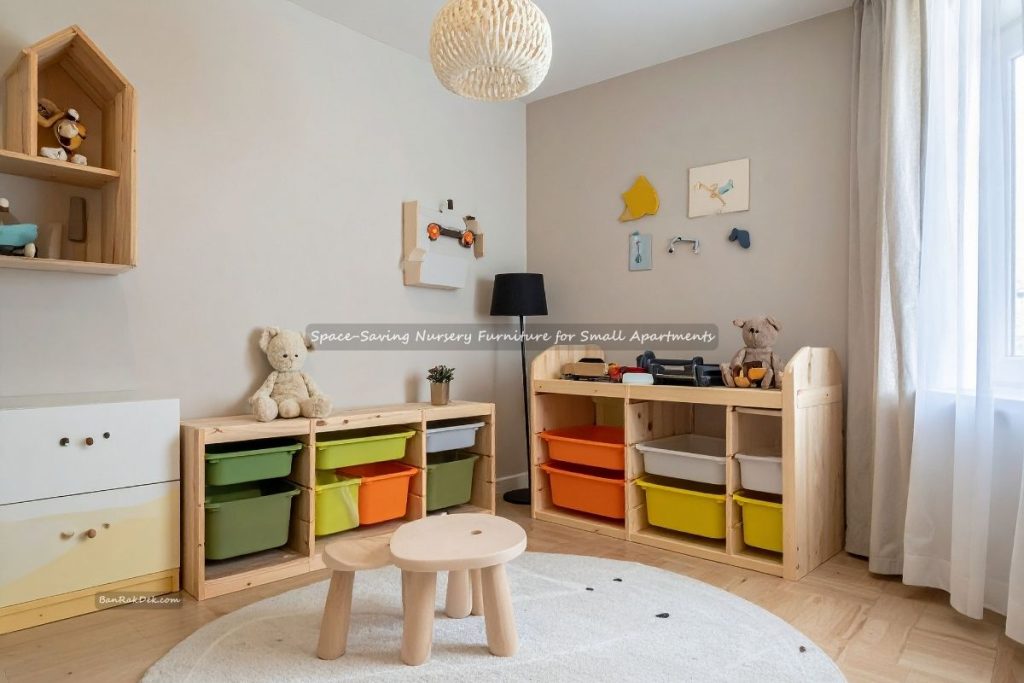
Pro mindset: Before buying anything, map your room at scale (even a simple sketch on paper). Mark doors, windows, outlets, and the high-traffic pathways to the crib and changing zone. This upfront clarity will guide every purchase.
Cribs That Truly Save Space (and Grow with Your Baby)
The crib is the anchor, so choose one that fits your footprint and future.
Mini Cribs vs. Standard Cribs
A mini crib for small spaces is shorter and narrower than a standard crib, freeing up floor area for a dresser or glider. Many mini models accept a thinner mattress and are ideal for the first 18–24 months. If you plan to room-share, a mini crib or a collapsible bassinet can tuck beside your bed with a clear path in and out.
Convertible Cribs with Built-In Storage
A convertible crib with drawers or a crib with changer combo gives you sleep + storage + changing in one footprint. Drawers under the mattress are perfect for swaddles, extra sheets, and sleep sacks. When the baby outgrows the changer, remove it and repurpose the surface as a bookshelf or display ledge.
Folding & Portable Options
A folding crib (or portable crib with wheels) helps in micro spaces and multi-use rooms. Roll it aside for daytime play, fold it for deep cleaning, or move it to the living area when hosting guests. Locking casters keep things safe and steady.
Corner & Nook Solutions
If your room has a quirky corner, consider a corner-friendly crib or place a slim bookcase between crib and wall to act as a visual buffer and storage tower. Always allow at least 60–75 cm of clearance to stand, soothe, and change bedding.
👉 “Want furniture that grows with your child? Discover smart ideas in our post on Customizable Furniture Solutions for Growing Kids.”
Changing Table & Storage Combos That Punch Above Their Weight
A traditional changing table takes up space that often sits idle. Try these alternatives:
Wall-Mounted Changing Stations
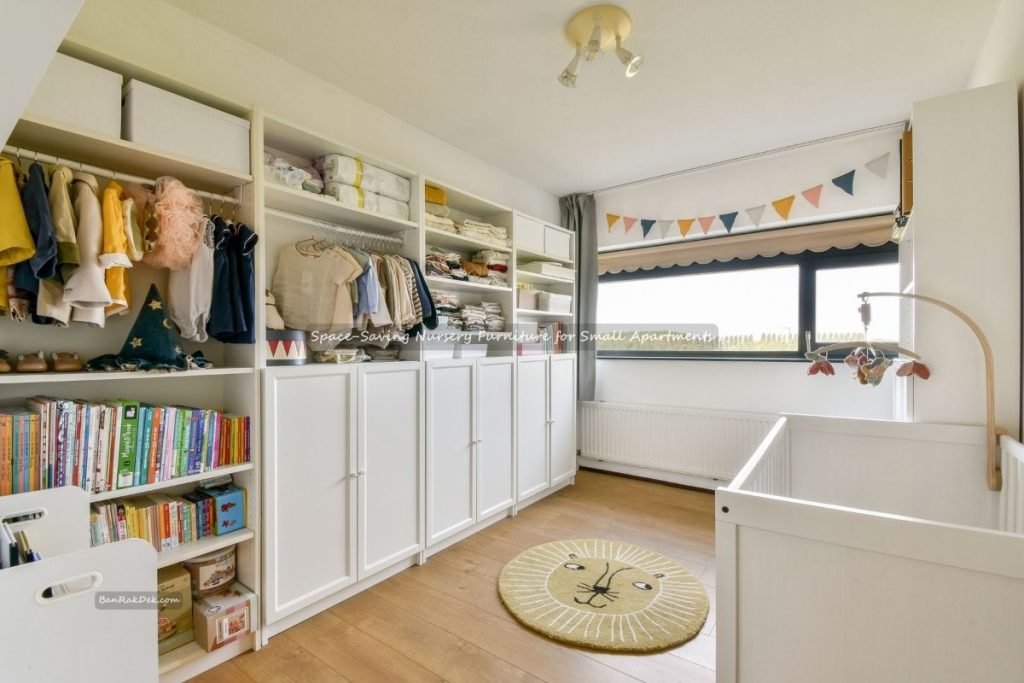
A wall-mounted changing table flips down when needed and tucks away when you’re done—great for tight rooms. Install into studs and keep a small lidded bin nearby for diapers and wipes. This frees the floor for a laundry hamper or rolling cart.
Dresser + Topper = Two-in-One Hero
A slim dresser (or narrow dresser with changing topper) acts as your changing zone and long-term storage. When you’re past diapers, just remove the topper. Use top drawers for daily essentials; reserve lower drawers for bulk backups and seasonal clothes. This is one of the most reliable small nursery furniture ideas and layout strategies: one footprint, multiple functions.
Vertical Storage, Closet Hacks & Under-Crib Wins
- Vertical nursery storage: Reach upward with floating shelves, slim bookcases, and a pegboard over the changer for lotions, thermometers, and nail clippers.
- Closet nursery: If you have a deep closet, convert it: mount a mini rod for baby clothes, add shallow shelves, and place a mini crib just outside.
- Under-crib storage: Low rolling bins or integrated drawers hide backup diapers, wipes, and extra blankets—and make cleaning a breeze.
Seating That Fits: Compact Comfort for Feeding & Bonding
You don’t need a bulky recliner to rock in comfort.
- Compact nursing chair: Look for a tight back, supportive seat, and a smaller footprint.
- Narrow glider: Armless designs shave precious centimeters and make small rooms feel lighter.
- Foldable or stackable stools: Keep a lightweight stool as a footrest during late-night feeds; tuck it under the dresser when not in use.
- Tip: Measure your nursing “triangle”: chair + side table + lamp. If the lamp is wall-mounted, you can choose a tinier table—just big enough for a bottle and burp cloth.
Smart Storage Solutions That Keep Calm & Orderly
Storage is the secret to visual peace in tight quarters.
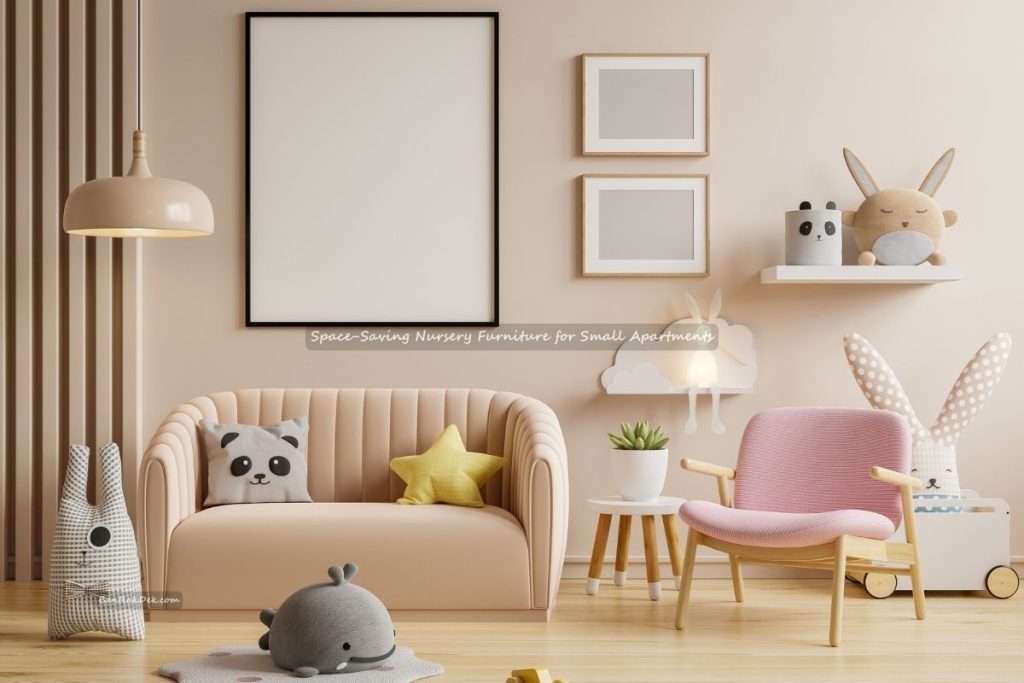
Floating Shelves & Slim Towers
Floating shelves for nursery essentials keep surfaces clear and put the cutest items at eye level. A narrow tower or cube organizer categorizes toys, swaddles, and books while using minimal width.
Over-the-Door & Pegboard Systems
Over-the-door pockets corral socks, mittens, and travel-sized lotions. A pegboard above the dresser adapts with your baby—bottle caddies now, hair accessories and craft cups later.
Rolling Bins, Baskets & Under-Crib Drawers
Combine under-crib storage with a couple of rolling bins for laundry and toys. Label baskets (sleepwear, bath, medical) so fatigued brains can find things fast.
Create Zones
Even in a single room, define tiny “zones”: sleep, change, feed, play. Zones keep surfaces from becoming catch-alls and help you clean up quickly before naps—or guests.
Layout & Design Tips for Micro Rooms (That Still Look Beautiful)
The best space-saving nursery furniture for small apartments shines when your layout supports it. Here’s how to make the most of small nursery furniture ideas and layout from day one:
Choose the Longest Wall for the Crib
This maximizes access on at least one side and leaves room at the foot for a rolling cart or storage bench. Keep 60 cm clear at minimum around the crib for sheet changes.
Shared Bedroom & Studio Setups
In a studio or 1-bedroom, consider a light room divider or curtain to create a visual boundary. For studio apartment nursery setups, put the crib near the window for air circulation (avoid direct AC drafts). Use blackout curtains and a white-noise machine to protect sleep without adding bulk.
Nooks, Alcoves & “Closet Nurseries”
A deep alcove or closet can hold a mini crib and a narrow dresser. Add puck lights under a shelf instead of a floor lamp to save space.
Minimal & Scandinavian Small-Space Vibes
A minimal nursery design with pale woods, soft whites, and a few natural textures opens up visual space. Limit your palette to 2–3 tones. Store boldly colored toys in opaque bins to reduce visual noise.
Safety & Air Quality
Prioritize non-toxic furniture with low-VOC finishes, anchor tall units to the wall, and choose washable covers. In humid climates, pick ventilated storage and mold-resistant baskets; leave a few centimeters between furniture and walls for air flow.
Budget-Friendly Picks & Where to Shop (Without Compromising Safety)
You can furnish a tiny nursery without draining your savings.
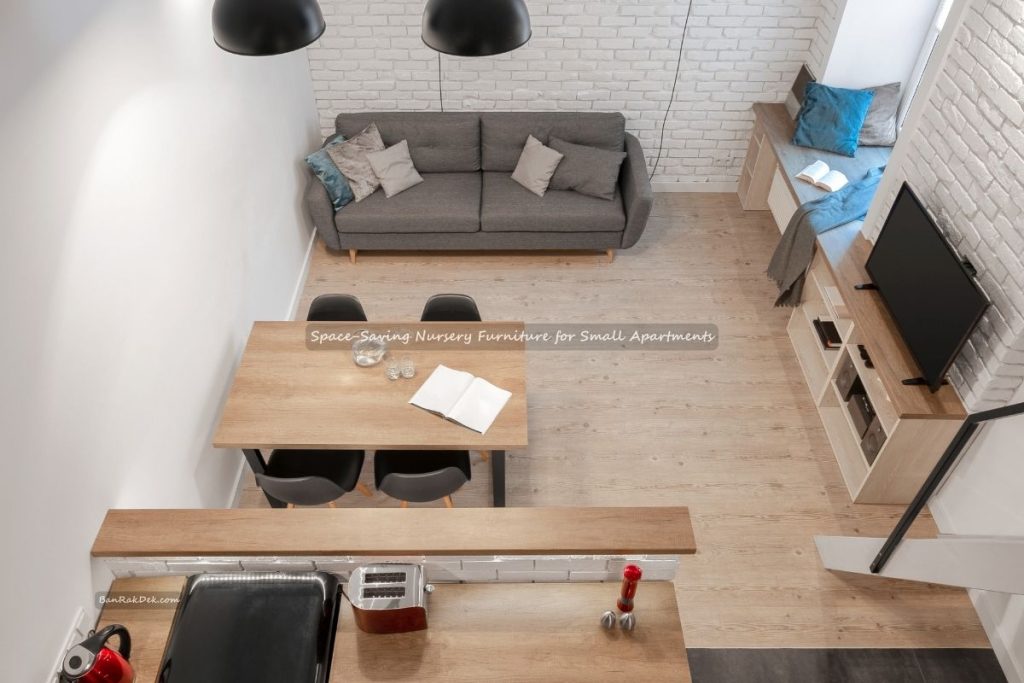
- Buy multipurpose: A dresser + topper costs less than separate changing tables and lasts years longer.
- Shop sets: Look for compact bundles labeled “mini,” “slim,” or “with storage”—great value if you love a coordinated look.
- Curate secondhand: Solid wood dressers refurbish beautifully; just confirm drawers glide smoothly and avoid peeling paint. Always buy the crib and mattress new for safety.
- Regional reality: In dense cities, delivery and assembly options matter. Measure elevator and doorway widths beforehand; choose flat-pack items that fit.
- Keywords to search (when browsing): “budget nursery furniture,” “affordable compact nursery furniture,” and “multipurpose nursery furniture.”
A Room-by-Room Walkthrough (So You Can Visualize It)
Here’s how the pieces come together in different small-home scenarios.
1) The Shared-Bedroom Mini Nursery
- Crib: Mini crib beside your bed on the longest wall.
- Changing: Dresser + topper opposite the crib, with a pegboard above.
- Storage: Under-crib drawers for linens; over-the-door organizer for clothes; rolling cart for nightly supplies.
- Seating: Compact nursing chair angled near an outlet; wall-mounted lamp to save floor space.
- Why it works: Clear path from bed to crib, everything within arm’s reach.
2) The Studio Apartment Nursery Nook
- Crib: Standard crib with under-storage if you have the width; otherwise, a folding or portable crib on locking casters.
- Changing: Wall-mounted changing table near the bathroom for quick washups.
- Storage: Floating shelves for daily items; slim tower by the door for diaper refills; baskets under the sofa for backup wipes and creams.
- Seating: Narrow glider that swivels to face the crib or living space.
- Why it works: Vertical storage + roll-away crib keep the main area flexible for daytime tasks.
3) The Closet-Converted Micro Nursery
- Crib: Mini crib just outside the closet; inside, mount a rod at adult waist height and a shelf above for diapers.
- Changing: Top the slim dresser with a changing pad; tuck a hamper underneath.
- Storage: Labelled bins on the closet shelf; shoe pockets for small clothes.
- Seating: Armless rocker on a low-pile rug for easy gliding.
- Why it works: The closet becomes a dedicated storage wall; the room stays open for traffic flow.
Cultural & Climate-Smart Considerations (Especially for Asian City Living)
Many families in Bangkok, Singapore, or Manila live in compact apartments and deal with heat and humidity.
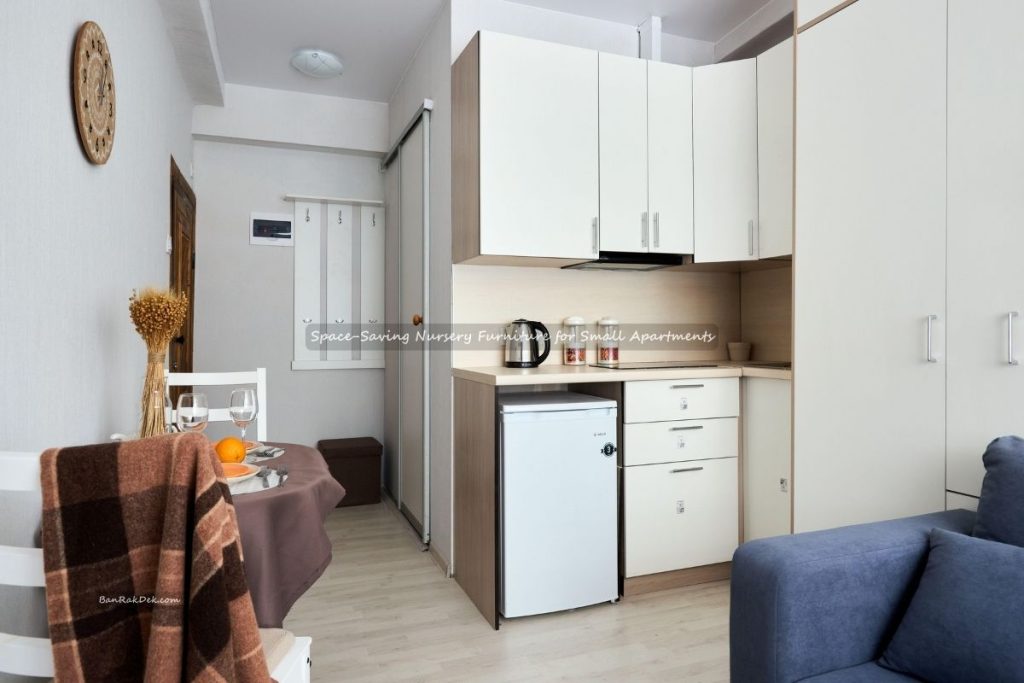
- Materials that breathe: Slatted cribs, rattan or ventilated baskets, and linen-blend textiles prevent mustiness.
- Mold-aware placement: Keep furniture a bit off exterior walls and let air circulate behind dressers.
- Light colors, airy feel: Pale woods and light fabrics reflect sunlight, making small rooms feel bigger.
- Local sourcing: When possible, choose brands that offer in-home assembly and after-sales support—helpful when elevators are small and hallways tight.
Put It All Together: Your 6-Step Mini Nursery Plan
- Measure & map your room, doors, and outlets.
- Choose the crib first (mini, convertible, or folding) and place it on the longest wall.
- Pick a combo changer (dresser + topper or wall-mounted) and anchor storage vertically.
- Select compact seating and a tiny side table or wall shelf for feeding time.
- Build zones (sleep, change, feed, play) and label baskets for autopilot tidying.
- Safety check: Anchor tall furniture, use low-VOC finishes, and keep clear paths.
Quick Shopping & Setup Checklist
- □ Choose your crib: mini / convertible with drawers / folding on casters
- □ Select changing solution: wall-mounted / dresser + topper
- □ Plan vertical storage: floating shelves / slim tower / pegboard
- □ Add seating: compact nursing chair or narrow glider
- □ Organize: labelled baskets, over-the-door pockets, rolling bins
- □ Safety: anchor tall units, pick non-toxic furniture, maintain clear pathways
Conclusion: Small Space, Big Comfort
A nurturing nursery doesn’t need a giant footprint. With space-saving nursery furniture for small apartments, plus thoughtful small nursery furniture ideas and layout choices, you can craft a room that’s restful, safe, and easy to live in. Focus on multipurpose pieces, vertical storage, and breathable materials; keep traffic paths open; and choose a calming, minimal palette. When everything has a place—and every piece earns its keep—tiny rooms feel bigger, your routine runs smoother, and the whole home breathes easier.
FAQs
1) What’s the best crib for a small apartment?
Look for a mini crib for small spaces or a folding crib with locking wheels. If you want longevity, a convertible crib with drawers saves floor space by replacing a separate storage unit. Pair it with under-crib storage for linens and backup diapers.
2) How do I design a nursery in a shared bedroom?
Start with small nursery furniture ideas and layout basics: place the crib on the longest wall, choose a slim dresser with a changing topper, and use vertical nursery storage. A wall-mounted lamp and blackout curtain carve out a cozy, sleep-friendly zone.
3) Are wall-mounted changing tables safe?
Yes—when installed into studs with appropriate hardware and used within weight limits. A wall-mounted changing table maximizes floor space; keep essentials in a nearby pegboard or shelf so you never step away mid-change.
4) What budget-friendly space-savers work in tiny rooms?
Pick multipurpose nursery furniture (dresser + topper), add floating shelves for nursery items, and use over-the-door organizers. Many affordable pieces are labeled “mini,” “slim,” or “compact”—great for small homes.
5) Can I create a nursery in a closet?
Absolutely. Convert the closet to storage—rods, shelves, and bins—and place the mini crib just outside. Combine a narrow dresser with changing topper and under-crib storage to keep everything organized and accessible.