
- Introduction
- Start With The Essential Baby Care Items
- Safe Sleep Items
- Products That Should Not Replace A Safe Cot
- Buying A Cot Or Bassinet
- Cot Mattresses
- Nappies
- Changing Supplies
- Baby Wipes And Cotton Wool
- Nappy Cream
- Baby Clothing
- How Many Clothes To Buy
- Feeding Items For Breastfeeding Families
- Bottle-Feeding Equipment
- Cleaning And Sterilising Bottles
- High Chairs And Feeding Seats
- Baby Bath Items
- Bath Water And Temperature
- Baby Skincare Products
- Towels And Washcloths
- Baby Thermometer
- First-Aid And Health Supplies
- Car Seats
- Second-Hand Car Seats
- Pushchairs And Strollers
- Baby Carriers
- Baby Monitors
- Toys For Babies
- Pacifiers And Teethers
- Nursery Storage
- Cleaning Baby Care Items
- Buying Second-Hand Baby Items
- Checking Recalls And Product Information
- Products Parents May Not Need
- Creating A Simple Shopping Plan
- Common Buying Mistakes
- Conclusion
- FAQ
- What Baby Care Items Are Essential For A Newborn?
- How Many Newborn Clothes Should Parents Buy?
- Can A Baby Sleep In A Bouncer Or Car Seat?
- What Should Be Inside A Baby’s Cot?
- Can Parents Buy Baby Items Second-Hand?
- Should A Car Seat Be Purchased New?
- How Often Should Baby Bottles Be Sterilised?
- Are Expensive Baby Products Safer?
- Does A Baby Need Many Skincare Products?
- What Baby Products Can Parents Skip?
Introduction
Preparing for a baby can feel exciting, confusing, and expensive. Shops and online stores offer long lists of products, but many families need fewer things than advertisements suggest.
The most useful baby care items are those that support safe sleep, feeding, changing, bathing, clothing, transport, and everyday comfort. Parents do not need to buy every product before the baby arrives, and expensive equipment is not automatically safer or more practical.
Safety should come before colour, design, popularity, or extra features. Parents should read instructions, check age and weight limits, inspect products regularly, and look for recall information where available.
Some baby care items, including sleep products and car seats, require particular care because incorrect products or use can create serious risks. Other supplies, such as clothes, towels, storage boxes, and changing mats, can often be simple and affordable.
This guide explains which baby care items families may genuinely need, what to check before buying, which products can often be purchased second-hand, and which unnecessary items parents may prefer to skip.
👉 “Parents interested in supporting early development may also explore simple Montessori ideas for creating a child-centered home environment.”
Start With The Essential Baby Care Items
A newborn does not need a room filled with equipment.
The main categories include:
- A safe place to sleep
- Nappies and changing supplies
- Suitable clothing
- Feeding equipment where needed
- Basic bathing supplies
- Safe transport equipment
- A thermometer and simple health supplies
- Clean storage for everyday essentials
The exact list depends on how the baby will be fed, the climate, the home, transport needs, laundry access, and family support.
Parents can start with basic baby care items and add products only when a real need becomes clear.
Safe Sleep Items
A safe sleep space is one of the most important preparations.
Suitable infant sleep products generally include a cot, crib, bassinet, portable play yard, or bedside sleeper designed and approved for infant sleep. The sleep surface should be firm, flat, and covered only with a fitted sheet. Babies should be placed on their backs for sleep, without pillows, loose blankets, bumpers, stuffed toys, or other soft objects in the sleep space.
Basic sleep baby care items may include:
- A cot, crib, or approved bassinet
- A firm, well-fitting mattress
- Two or three fitted sheets
- A suitable sleep sack when appropriate
- A waterproof mattress protector that does not alter firmness
- A baby monitor if the household needs one
The mattress should fit closely without gaps that could trap the baby.
Products That Should Not Replace A Safe Cot
Many products are designed for carrying, soothing, sitting, or supervised play rather than routine sleep.
Car seats, swings, bouncers, sofas, adult beds, nursing pillows, and loungers should not become a baby’s regular sleep space. If a baby falls asleep somewhere that is not intended for safe sleep, official guidance recommends moving the baby to an appropriate cot, bassinet, bedside sleeper, or play yard.
Parents should be especially cautious with:
- Inclined sleepers
- Soft baby nests
- Positioning pillows
- Sleep wedges
- Thick mattress toppers
- Cot bumpers
- Weighted sleep products
- Loose bedding
Inclined infant sleep products have raised safety concerns, and a flat, firm surface remains the safer choice.
Buying A Cot Or Bassinet
Before buying one of these baby care items, check:
- The product is designed for infant sleep
- The mattress fits correctly
- There are no broken or missing parts
- Hardware is secure
- The instructions are available
- The product has not been recalled
- The baby is within the stated age and weight limits
- The sides and base are stable
Avoid modifying a cot or adding homemade padding.
A second-hand cot may be usable when it meets current safety requirements and remains in excellent condition, but an old, damaged, incomplete, or recalled product should not be used.
Cot Mattresses
A cot mattress should be firm, flat, clean, and the correct size.
The NHS advises that some items can be purchased used, but identifies the cot mattress and car seat as products that are better obtained new.
Replace a mattress when it is:
- Sagging
- Torn
- Heavily stained
- Mouldy
- Soft around the edges
- The wrong size
- Missing its original cover
- Associated with an unknown history
A decorative or extra-soft mattress is not necessarily better for a baby.
Nappies
Nappies are among the most frequently used baby care items.
Families may choose:
- Disposable nappies
- Reusable cloth nappies
- A combination of both
Do not buy too many newborn-size nappies before birth because babies grow at different rates.
Check fit around the waist and legs. A nappy that is too tight may leave deep marks, while one that is too loose may leak.
Reusable nappies require an appropriate washing and drying routine, enough absorbent inserts, and clean storage before and after use.
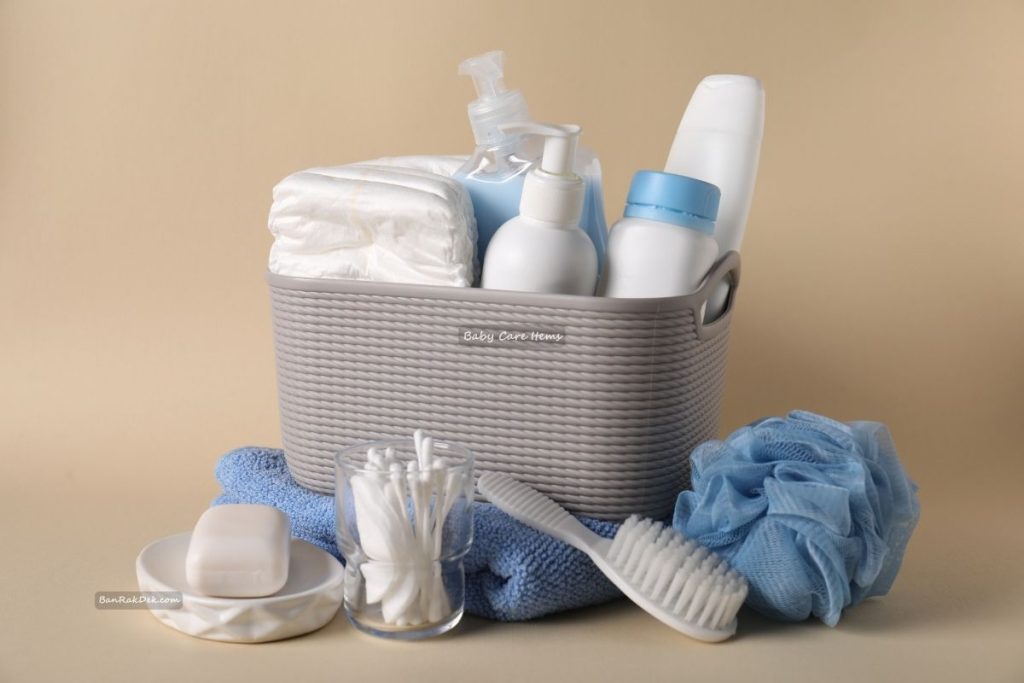
Changing Supplies
A simple changing area may include:
- Nappies
- A changing mat or folded towel
- Cotton wool or gentle wipes
- Barrier cream when needed
- Clean clothes
- Nappy bags or a covered bin
- Handwashing supplies
Changing a baby on a mat or towel on the floor reduces the risk of falling. When a raised changing table is used, the baby must be supervised continuously, and straps should not be treated as a substitute for an adult’s hand and attention.
Arrange baby care items within reach before beginning so there is no need to walk away.
Baby Wipes And Cotton Wool
For young or sensitive skin, parents may prefer:
- Cotton wool and clean water
- Fragrance-free wipes
- Alcohol-free wipes
- Products made for sensitive baby skin
Avoid strongly perfumed wipes if they cause redness or irritation.
Wipes should not be flushed unless local systems and the product instructions specifically permit it. In many cases, they belong in household waste.
Nappy Cream
Barrier cream may help protect skin from prolonged contact with moisture.
Use a thin layer and follow the product instructions.
Parents should seek healthcare advice when a rash:
- Is severe
- Spreads beyond the nappy area
- Develops blisters
- Has open sores
- Is accompanied by fever
- Does not improve
- Appears infected
Cream is a useful part of some baby care items, but it should not be used to cover up a continuing or worsening skin problem.
Baby Clothing
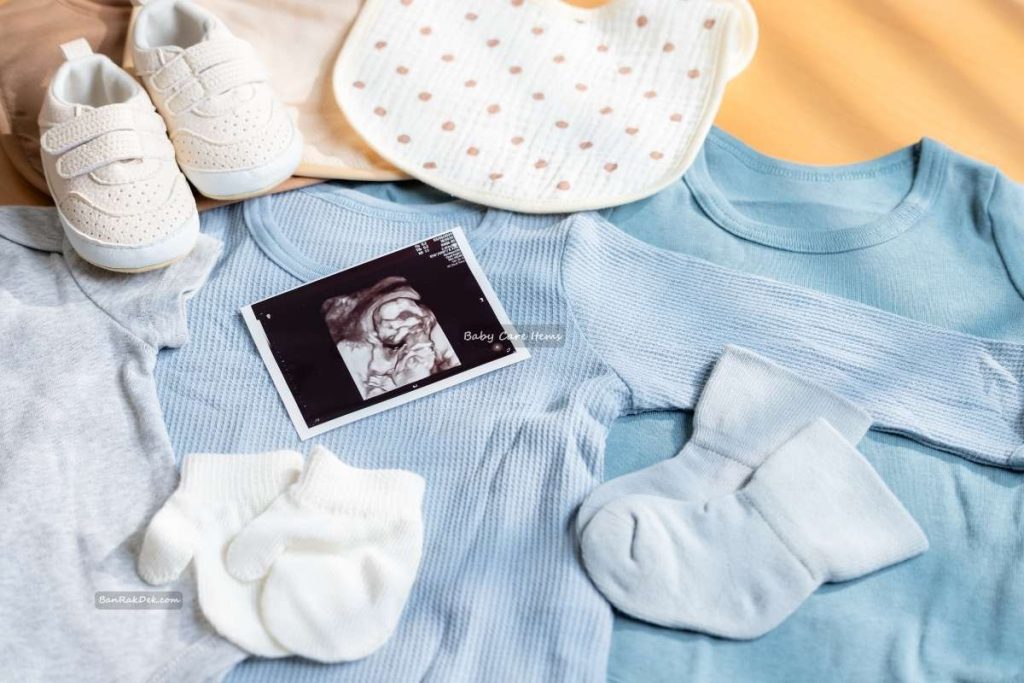
Babies usually need comfortable, washable clothing rather than large wardrobes.
Practical clothing may include:
- Bodysuits
- Sleepsuits
- Lightweight tops
- Soft trousers
- Socks
- A sun hat
- A warm layer where required
- Bibs
- Muslin cloths
Choose clothing that is easy to open for changing.
Avoid loose decorations, long cords, detachable buttons, rough seams, and accessories that may create choking or strangulation risks.
In warm climates, lightweight layers are usually easier to adjust than thick outfits.
How Many Clothes To Buy
The number depends on laundry frequency and climate.
A basic collection could include:
- Six to eight bodysuits
- Six to eight sleepsuits
- Several bibs
- Several muslin cloths
- Two light cardigans or layers
- A few pairs of socks
- One or two hats appropriate for the weather
Babies can grow quickly, so buying too many clothes in the smallest size may create waste.
Clothing is among the easiest baby care items to borrow or purchase second-hand when it is clean and undamaged.
Feeding Items For Breastfeeding Families
Not every breastfeeding parent needs a large set of equipment.
Possible items include:
- Muslin cloths
- Nursing bras
- Breast pads
- A water bottle for the parent
- Nipple cream when appropriate
- A breast pump if genuinely needed
- Milk-storage containers when expressing
- Feeding pillows used only while an adult is awake and supervising
A feeding pillow should not be used as an infant sleep product.
Parents can often wait before buying an expensive pump unless they know it will be required.
Bottle-Feeding Equipment
Bottle-feeding baby care items may include:
- Bottles
- Teats
- Bottle brush
- Sterilising equipment
- Formula preparation supplies
- Clean storage
- Insulated transport equipment when appropriate
Parents should choose bottles and teats suitable for the baby’s age and replace damaged, cracked, sticky, or worn parts.
Instructions for preparing formula should be followed precisely rather than changing powder or water quantities.
Cleaning And Sterilising Bottles
Feeding equipment must be cleaned thoroughly before sterilising. NHS guidance advises sterilising bottles and teats until a baby is at least 12 months old. It also recommends washing hands, cleaning work surfaces, checking equipment for damage, washing items in hot soapy water, and rinsing before sterilisation.
Common sterilising methods include:
- Steam sterilising
- Microwave sterilising with an appropriate unit
- Cold-water sterilising solution
- Boiling when the manufacturer confirms the equipment is suitable
Always follow the product instructions.
High Chairs And Feeding Seats
A high chair becomes useful when the baby is developmentally ready for solid food and can sit with suitable support.
Check for:
- A stable base
- A secure harness
- A crotch restraint
- Easy-to-clean surfaces
- No sharp edges
- Locking mechanisms that work correctly
- Age and weight suitability
Never place a high chair near a table, counter, wall, hot drink, cable, or other object the baby could push against or pull down.
A tray does not replace the harness.
Baby Bath Items
Bathing baby care items can remain simple.
Parents may use:
- A baby bath or clean basin
- A soft towel
- Washcloths
- Cotton wool
- A mild cleanser when needed
- A clean nappy
- Fresh clothes
- A non-slip mat for the adult’s footing
Prepare everything before placing the baby in or near water.
A baby must never be left alone in the bath, even briefly.
Bath Water And Temperature
Use comfortably warm rather than hot water.
Check the temperature with the inside of the wrist or elbow, and mix the water thoroughly to remove hot areas.
Keep hot drinks, electrical appliances, and cords away from the bathing area.
NHS baby-bathing guidance recommends preparing warm water, a towel, cotton wool, and a clean nappy before washing begins.
A bath thermometer can be helpful, but it does not replace adult checking and supervision.
Baby Skincare Products
A baby usually does not need a complicated skincare routine.
Useful products may include:
- Mild fragrance-free cleanser
- Simple moisturiser when needed
- Barrier cream
- Suitable sunscreen when age-appropriate and advised
- Gentle shampoo if required
Introduce products one at a time.
Avoid applying essential oils, strong perfumes, adult skincare, talcum powder near the face, or homemade herbal mixtures without qualified guidance.
Fewer skincare baby care items often make it easier to identify the cause if irritation develops.
Towels And Washcloths
Soft, washable towels are sufficient.
Parents do not need highly specialised towels, although a hood can help keep the baby warm after bathing.
Wash new towels before first use and keep them dry between baths.
Replace anything that becomes rough, mouldy, or difficult to clean.
Baby Thermometer
A digital thermometer is a useful item for most families.
Choose one intended for babies or children and read the instructions before it is urgently needed.
Do not rely only on touching the forehead to judge whether a baby has a fever.
Parents should know how and where their healthcare provider recommends taking the baby’s temperature, because suitable methods vary by age.
First-Aid And Health Supplies
A simple home kit may include:
- Digital thermometer
- Sterile gauze
- Saline drops when recommended
- Baby nail file or suitable clippers
- Prescribed medicines
- Emergency contact information
- A bulb syringe or nasal aspirator when advised
Do not give medicines based only on another parent’s advice.
Medication doses must be suitable for the child’s age and weight and should follow professional or product guidance.
Car Seats
A correctly selected and installed car seat is one of the most important travel baby care items.
Current CDC guidance recommends keeping babies rear-facing in the back seat until they reach the maximum height or weight limit allowed by the seat. A rear-facing seat should never be placed in front of an active passenger airbag.
Check:
- The seat suits the baby’s size
- It fits the vehicle
- Installation follows the manual
- Harness straps are positioned correctly
- The seat has not expired
- It has not been involved in a serious crash
- It has not been recalled
- All original parts are present
Second-Hand Car Seats
A used car seat may have an unknown crash history, missing parts, expired materials, or outdated safety features.
For this reason, buying new is usually the safer option unless the full history is known and the seat can be carefully verified. The NHS also lists the car seat among items that should generally be new.
Never use a car seat simply because it looks clean.
Pushchairs And Strollers
Choose a pushchair based on daily life rather than appearance.
Consider:
- Pavement quality
- Public transport
- Stairs
- Car boot size
- Storage
- Weather protection
- Seat recline
- Brake quality
- Harness
- Folding mechanism
- Weight limits
Always engage the brake when stationary.
Keep bags within the recommended storage area instead of hanging heavy items from the handles, which may make the pushchair unstable.
Baby Carriers
A baby carrier can be useful for short walks, public transport, and places where a pushchair is difficult.
Check:
- Age and weight suitability
- Head and neck support
- Clear airway
- Secure fastenings
- Comfortable adult fit
- Correct leg position
- Heat and ventilation
- Instructions for front and back carrying
The baby’s face should remain visible, and the chin should not be pressed tightly against the chest.
A carrier is not a substitute for an approved car seat.
Baby Monitors
Baby monitors may provide convenience but do not replace direct supervision or safe sleep practices.
Options include:
- Audio monitors
- Video monitors
- Movement monitors
- Connected smart monitors
Keep cords far outside the baby’s reach.
Parents should be cautious about products claiming to prevent medical emergencies unless they are prescribed medical devices.
A standard monitor is optional among baby care items, particularly in a small home where caregivers can easily hear the baby.
Toys For Babies
Young babies need only a small number of simple toys.
Suitable options may include:
- Soft books
- Rattles
- Play mats
- High-contrast cards
- Teething toys
- Lightweight sensory toys
Check toys for:
- Age suitability
- Secure parts
- No loose batteries
- No long cords
- No sharp edges
- No small detachable components
- Washable surfaces
Inspect toys regularly because parts can loosen over time.
Pacifiers And Teethers
Choose products made for the baby’s age.
Pacifiers should be one-piece or securely constructed, easy to clean, and replaced when cracked, sticky, torn, or worn.
Do not attach a pacifier to the baby with a long cord, ribbon, necklace, or improvised clip.
Teething products should be large enough not to create a choking risk and should not contain leaking gel or damaged sections.
Nursery Storage
Safe storage makes everyday baby care items easier to manage.
Keep frequently used supplies where adults can reach them without leaving the baby unattended.
Store medicines, creams, cleaning products, batteries, plastic bags, cords, and small objects in locked or inaccessible places.
Furniture should be stable, and tall storage units may need appropriate anchoring.
Do not place heavy objects above the cot or changing area.
Cleaning Baby Care Items
Different products require different cleaning methods.
Parents should:
- Follow manufacturer instructions
- Wash fabric items regularly
- Allow items to dry completely
- Clean feeding equipment after use
- Wipe high-chair surfaces
- Inspect bath toys for trapped water
- Clean pushchair handles and trays
- Check carriers for damage
- Avoid mixing cleaning chemicals
Do not use strong disinfectants on items that contact the baby’s mouth unless the instructions confirm they are appropriate and the item is rinsed correctly.
Buying Second-Hand Baby Items
Some baby care items can be purchased second-hand safely when their condition and history are clear.
Possible options include:
- Clothing
- Muslin cloths
- Books
- Simple toys
- Storage furniture
- Some pushchairs
- High chairs with complete working restraints
- Baby baths
Inspect items for damage, missing components, mould, recalls, sharp edges, loose parts, and cleaning difficulty.
Avoid used products when safety depends on hidden structural integrity or an unknown history.
Checking Recalls And Product Information
Before using major equipment:
- Search the model and manufacturer
- Check recall notices
- Keep receipts
- Register products where possible
- Save instructions
- Record model numbers
- Follow age and weight limits
Stop using an item immediately when it cracks, becomes unstable, loses parts, or no longer fits the baby.
Online reviews can be useful, but official safety notices and product instructions are more important.
Products Parents May Not Need
Some products are useful for particular households but unnecessary for others.
Parents may be able to skip:
- Large collections of newborn clothes
- Multiple bottle systems before knowing preferences
- Decorative cot bedding
- Cot bumpers
- Pillow sets
- Shoe collections for a non-walking baby
- Complicated wipe warmers
- Large toy collections
- Unverified sleep gadgets
- Strongly scented skincare sets
- Several expensive carriers
- Large specialist furniture that has a short use period
Buying fewer baby care items can save money, reduce clutter, and make safety checks easier.
Creating A Simple Shopping Plan
Divide the list into three groups.
Needed Before Birth
Examples include:
- Safe sleep space
- Nappies
- Basic clothing
- Car seat when travelling by car
- Feeding essentials
- Changing mat
- Towels
- Thermometer
Can Wait
Examples include:
- High chair
- Larger clothes
- Teething toys
- Activity equipment
- Additional bottles
- Travel accessories
Optional
Examples include:
- Bottle warmer
- Wipe warmer
- Specialised nursery furniture
- Multiple monitors
- Decorative products
- Large toy collections
This approach helps parents focus spending on important baby care items.
Common Buying Mistakes
Buying Too Much In One Size
Babies may outgrow nappies and clothing quickly.
Choosing Appearance Over Safety
A beautiful item is not useful if it does not meet the baby’s needs safely.
Ignoring Instructions
Incorrect assembly or use can make otherwise suitable equipment unsafe.
Using Every Product For Sleep
Only products specifically intended and approved for infant sleep should be used as routine sleep spaces.
Buying An Unknown Used Car Seat
Hidden crash damage or missing parts may not be visible.
Adding Soft Items To The Cot
Pillows, loose blankets, toys, and bumpers should not be placed around a sleeping infant.
Leaving A Baby On A Changing Table
Prepare supplies first and maintain continuous supervision.
Assuming Expensive Means Better
Simple baby care items can be safe and effective when properly selected and used.
👉 “Parents choosing everyday care products may also find this simple checklist of baby essentials for young families helpful when planning what they may need at home or while traveling.”
Conclusion
Parents do not need every product marketed for babies. The most important baby care items support safe sleep, feeding, changing, bathing, clothing, transport, hygiene, and basic health monitoring.
Begin with a firm, flat sleep space intended for infants, using only a fitted sheet and placing the baby on the back for sleep. Avoid loose bedding, pillows, bumpers, and products not designed for routine sleep.
Keep changing supplies within reach and never leave a baby unattended on a raised surface. Clean and sterilise feeding equipment according to current guidance, and replace bottles or teats when damaged.
For car travel, use a correctly installed rear-facing car seat in the back seat until the baby reaches the seat’s rear-facing height or weight limit.
Some baby care items, including clothes, books, and simple furniture, may be purchased second-hand after careful inspection. Cot mattresses and car seats are generally better purchased new unless their full condition and history can be verified.
The best approach is to buy gradually, follow product instructions, check recalls, and focus on what genuinely supports the baby’s safety and the family’s daily routine.
FAQ
What Baby Care Items Are Essential For A Newborn?
The essentials include a safe sleep space, fitted sheets, nappies, changing supplies, basic clothes, feeding equipment where needed, towels, a thermometer, and an appropriate car seat for car travel.
How Many Newborn Clothes Should Parents Buy?
A small collection is usually enough. Around six to eight bodysuits and sleepsuits may be practical when laundry is done regularly.
Can A Baby Sleep In A Bouncer Or Car Seat?
These products are not intended as routine sleep spaces. A sleeping baby should be moved to a firm, flat cot, crib, bassinet, bedside sleeper, or play yard designed for infant sleep.
What Should Be Inside A Baby’s Cot?
The cot should contain a firm, well-fitting mattress and a fitted sheet. Pillows, toys, bumpers, loose blankets, and other soft objects should be kept out.
Can Parents Buy Baby Items Second-Hand?
Clothes, books, storage, and some washable equipment may be suitable second-hand. Avoid products that are damaged, recalled, incomplete, or have an unknown safety history.
Should A Car Seat Be Purchased New?
A new car seat is generally preferable because its crash history, expiry, instructions, and parts are known.
How Often Should Baby Bottles Be Sterilised?
Feeding equipment should be cleaned after use and sterilised according to current health guidance. NHS guidance recommends sterilising bottles and teats until at least 12 months.
Are Expensive Baby Products Safer?
Not automatically. Safety depends on appropriate design, correct use, condition, standards, instructions, and suitability for the baby.
Does A Baby Need Many Skincare Products?
Usually not. A gentle cleanser, simple moisturiser when needed, and barrier cream may be sufficient. Avoid heavily fragranced or strong products.
What Baby Products Can Parents Skip?
Families may not need decorative cot bedding, cot bumpers, many newborn outfits, large toy collections, wipe warmers, multiple bottle systems, or unverified sleep gadgets.